Showing posts with label The Story of Tea. Show all posts

Thursday, May 26, 2011

Tea

Tea is the agricultural product of the leaves, leaf buds, and internodes of various cultivars and sub-varieties of the Camellia sinensis plant, processed and cured using various methods. "Tea" also refers to the aromatic beverage prepared from the cured leaves by combination with hot or boiling water, and is the common name for the Camellia sinensis plant itself. After water, tea is the most widely consumed beverage in the world. It has a cooling, slightly bitter, astringent flavour which many enjoy.
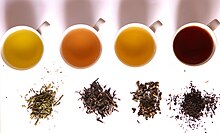
There are at least six varieties of tea: white, yellow, green, oolong, black, and post-fermented teas of which the most commonly found on the market are white, green, oolong, and black. Some varieties, such as traditional oolong tea and Pu-erh tea, a post-fermented tea, can be used medicinally.
The term "tea" is sometimes loosely used to refer to "herbal teas", which are an infusion or tisane of leaves, flowers, fruit, herbs, or other plant material that contains no Camellia sinensis. In East Asian culture, the term "red tea" has always been used to represent what the West understands as "black tea". This can be confusing in the English speaking world because the same term is now also used to represent the drink made with the South African rooibos plant which contains no Camellia sinensis.
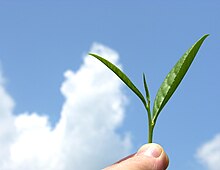
Tea plants are propagated from seed or by cutting; it takes approximately 4 to 12 years for a tea plant to bear seed, and about 3 years before a new plant is ready for harvesting. In addition to a zone 8 climate or warmer, tea plants require at least 127 cm. (50 inches) of rainfall a year and prefer acidic soils. Traditional Chinese Tea Cultivation and Studies believes that high-quality tea plants are cultivated at elevations of up to 1,500 metres (4,900 ft): at these heights, the plants grow more slowly and acquire a better flavour.
Only the top 1-2 inches of the mature plant are picked. These buds and leaves are called flushes. A plant will grow a new flush every seven to fifteen days during the growing season, and leaves that are slow in development always produce better flavored teas.
A tea plant will grow into a tree of up to 16 metres (52 ft) if left undisturbed, but cultivated plants are pruned to waist height for ease of plucking.
Two principal varieties are used: the China plant (C. sinensis sinensis), used for most Chinese, Formosan and Japanese teas (but not Pu-erh); and the clonal Assam plant (C. sinensis assamica), used in most Indian and other teas (but not Darjeeling). Within these botanical varieties, there are many strains and modern Indian clonal varieties. Leaf size is the chief criterion for the classification of tea plants, with three primary classifications being: Assam type, characterized by the largest leaves; China type, characterized by the smallest leaves; and Cambod, characterized by leaves of intermediate size.
A tea's type is determined by the processing which it undergoes. Leaves of Camellia sinensis soon begin to wilt and oxidize, if not dried quickly after picking. The leaves turn progressively darker as their chlorophyll breaks down and tannins are released. This enzymatic oxidation process, known as fermentation in the tea industry, and is caused by the plant's intracellular enzymes and causes the tea to darken. In tea processing, the darkening is stopped at a predetermined stage by heating, which deactivates the enzymes responsible. In the production of black teas, the halting of oxidization by heating is carried out simultaneously with drying.
Tea is traditionally classified based on the techniques with which it is produced and processed.
  • White tea: Wilted and unoxidized
  • Yellow tea: Unwilted and unoxidized, but allowed to yellow
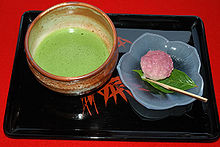
  • Green tea: Unwilted and unoxidized
  • Oolong: Wilted, bruised, and partially oxidized
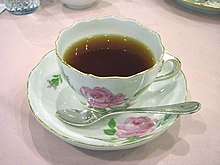
  • Black tea: Wilted, sometimes crushed, and fully oxidized
  • Post-fermented tea: Green tea that has been allowed to ferment/compost
Content
Tea contains catechins, a type of antioxidant. In a freshly picked tea leaf, catechins can compose up to 30% of the dry weight. Catechins are highest in concentration in white and green teas, while black tea has substantially fewer due to its oxidative preparation. Research by the U.S. Department of Agriculture has suggested that levels of antioxidants in green and black tea do not differ greatly, with green tea having an oxygen radical absorbance capacity (ORAC) of 1253 and black tea an ORAC of 1128 (measured in μmolTE/100g). Tea also contains theanine and the stimulant caffeine at about 3% of its dry weight, translating to between 30 mg and 90 mg per 8 oz (250 ml) cup depending on type, brand and brewing method. Tea also contains small amounts of theobromine and theophylline. Due to modern day environmental pollution fluoride and aluminum have also been found to occur in tea, with certain types of brick tea made from old leaves and stems having the highest levels. This occurs due to the tea plant's high sensitivity to and absorption of environmental pollutants.
Dry tea has more caffeine by weight than coffee; nevertheless, more dried coffee is used than dry tea in preparing the beverage, which means that a cup of brewed tea contains significantly less caffeine than a cup of coffee of the same size. Tea has negligible carbohydrates, fat, and protein.
Although tea contains various types of polyphenols and tannin, tea does not contain tannic acid. Tannic acid is not an appropriate standard for any type of tannin analysis because of its poorly defined composition.
History
Tea plants are native to East and South Asia and probably originated around the point of confluence of the lands of northeast India, north Burma, southwest China, and Tibet. Although tales exist in regards to the beginnings of tea being used as a beverage, no one is sure of its exact origins. The usage of tea as a beverage was first recorded in China, with the earliest records of tea consumption with records dating back to the 10th century BC. It was already a common drink during Qin Dynasty (around 200 BC) and became widely popular during Tang Dynasty, when it was spread to Korea and Japan. Trade of tea by the Chinese to Western nations in the 19th century spread tea and the tea plant to numerous locations around the world.
Tea was imported to Europe during the Portuguese expansion of the 16th century, at which time it was termed chá. In 1750, tea experts traveled from China to the Azores Islands, and planted tea, along with jasmines and mallows, to give the tea aroma and distinction. Both green tea and black tea continue to grow in the islands, that are the main supplier to continental Portugal. Catherine of Braganza, wife of Charles II, took the tea habit to Great Britain around 1660, but it was not until the 19th century Britain that tea became as widely consumed as it is today.
Packaging
Tea bags
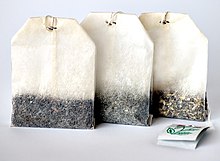
Tea leaves are packed into a small envelope (usually composed of paper) known as a tea bag. The use of tea bags is easy and convenient, making tea bags popular for many people today. However, the tea used in tea bags has an industry name—it is called fannings or "dust" and is the waste product produced from the sorting of higher quality loose leaf tea, although this certainly is not true for all brands of tea, especially in the case of many specialty, high quality teas now available in bag form. It is commonly held among tea aficionados that this method provides an inferior taste and experience. The paper used for the bag can also be tasted by many, which can detract from the tea's flavor. Because fannings and dust are a lower quality of the tea to begin with, the tea found in tea bags is less finicky when it comes to brewing time and temperature.
Loose tea
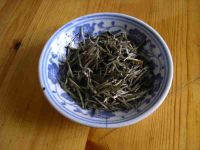
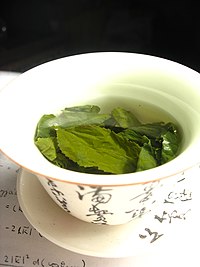
The tea leaves are packaged loosely in a canister or other container. Rolled gunpowder tea leaves, which resist crumbling, are commonly vacuum packed for freshness in aluminized packaging for storage and retail. The portions must be individually measured by the consumer for use in a cup, mug, or teapot. This allows greater flexibility, letting the consumer brew weaker or stronger tea as desired, but convenience is sacrificed. Strainers, "tea presses," filtered teapots, and infusion bags are available commercially to avoid having to drink the floating loose leaves and to prevent over-brewing. A more traditional, yet perhaps more efficient way around this problem is to use a three-piece lidded teacup, called a gaiwan. The lid of the gaiwan can be tilted to decant the leaves while pouring the tea into a different cup for consumption.
Compressed tea
Some teas (particularly Pu-erh tea) are still compressed for transport, storage, and aging convenience. The tea brick remains in use in the Himalayan countries. The tea is prepared and steeped by first loosening leaves off the compressed cake using a small knife. Compressed teas can usually be stored for longer periods of time without spoilage when compared with loose leaf tea.
Instant tea
In recent times, "instant teas" are becoming popular, similar to freeze dried instant coffee. Similar products also exist for instant iced tea, due to the convenience of not requiring boiling water. Instant tea was developed in the 1930s, but not commercialized until later. Nestea introduced the first instant tea in 1946, while Redi-Tea introduced the first instant iced tea in 1953.
These products often come with added flavors, such as vanilla, honey or fruit, and may also contain powdered milk. Tea connoisseurs tend to criticize these products for sacrificing the delicacies of tea flavor in exchange for convenience.
Canned tea
Canned tea was first launched in 1981 in Japan. As such, it is a fairly recent innovation, and it has mostly benefits in marketing.

Reference: http://en.wikipedia.org/wiki/Tea
Tuesday, May 24, 2011

Tea Preparation

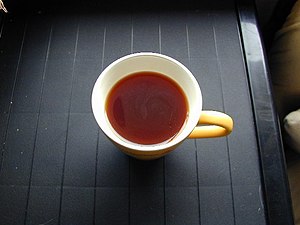
The traditional method of making a cup of tea is to place loose tea leaves, either directly or in a tea infuser, into a tea pot or teacup and pour hot water over the leaves. After a couple of minutes the leaves are usually removed again, either by removing the infuser, or by straining the tea while serving.
Most green teas should be allowed to steep for about two minutes, although some types of tea require as much as ten minutes, and others as little as thirty seconds. The strength of the tea should be varied by changing the amount of tea leaves used, not by changing the steeping time. The amount of tea to be used per amount of water differs from tea to tea but one basic recipe may be one slightly heaped teaspoon of tea (about 5 ml) for each teacup of water (200–240 ml) (7–8 oz) prepared as above. Stronger teas, such as Assam, to be drunk with milk are often prepared with more leaves, and more delicate high grown teas such as a Darjeeling are prepared with a little less (as the stronger mid-flavors can overwhelm the champagne notes).
The best temperature for brewing tea depends on its type. Teas that have little or no oxidation period, such as a green or white tea, are best brewed at lower temperatures, between 65 and 85 °C (149 and 185 °F), while teas with longer oxidation periods should be brewed at higher temperatures around 100 °C (212 °F). The higher temperatures are required to extract the large, complex, flavorful phenolic molecules found in fermented tea, although boiling the water reduces the amount of dissolved oxygen in the water.

Type
Water Temp.
  Steep Time
   Infusions
White Tea
   65 to 70 °C (149 to 158 °F)
  1–2 minutes
    3
Yellow Tea
   70 to 75 °C (158 to 167 °F)
  1–2 minutes
    3
Green Tea
   75 to 80 °C (167 to 176 °F)
  1–2 minutes
    4-6
Oolong Tea
   80 to 85 °C (176 to 185 °F)
  2–3 minutes
    4-6
Black Tea
   99 °C (210 °F)
  2–3 minutes
    2-3
Pu'er Tea
   95 to 100 °C (203 to 212 °F)
  Limitless
    Several
Herbal Tea
   99 °C (210 °F)
  3–6 minutes
    Varied


Some tea sorts are often brewed several times using the same tea leaves. Historically, in China, tea is divided into a number of infusions. The first infusion is immediately poured out to wash the tea, and then the second and further infusions are drunk. The third through fifth are nearly always considered the best infusions of tea, although different teas open up differently and may require more infusions of hot water to produce the best flavor.
One way to taste a tea, throughout its entire process, is to add hot water to a cup containing the leaves and after about 30 seconds to taste the tea. As the tea leaves unfold (known as "The Agony of the Leaves") they give up various parts of themselves to the water and thus the taste evolves. Continuing this from the very first flavours to the time beyond which the tea is quite stewed will allow an appreciation of the tea throughout its entire length.
Black tea
In the West, water for black tea is usually added near boiling point 99 °C (210 °F). Many of the active substances in black tea do not develop at temperatures lower than 90 °C (194 °F). Lower temperatures are used for some more delicate teas. The temperature will have as large an effect on the final flavor as the type of tea used. The most common fault when making black tea is to use water at too low a temperature. Since boiling point drops with increasing altitude, it is difficult to brew black tea properly in mountainous areas. It is also recommended that the teapot be warmed before preparing tea, easily done by adding a small amount of boiling water to the pot, swirling briefly, before discarding.

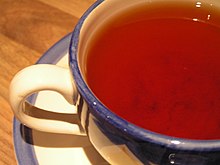
In the West, black teas are usually brewed for about 4 minutes and are usually not allowed to steep for less than 30 seconds or more than about five minutes (a process known as brewing or mashing in Britain). In many regions of the world, however, boiling water is used and the tea is often stewed. For example, in India black tea is often boiled for fifteen minutes or longer as a strong brew is preferred for making Masala chai. When the tea has brewed long enough to suit the tastes of the drinker, it should be strained while serving. The popular varieties of black (red) tea include Assam tea, Nepal tea, Darjeeling tea, Nilgiri tea, Turkish tea and Ceylon tea.
Green tea
Water for green tea, according to regions of the world that prefer mild tea, should be around 80 to 85 °C (176 to 185 °F); the higher the quality of the leaves, the lower the temperature. Hotter water will produce a bitter taste. However, this is the method used in many regions of the world, such as North Africa or Central Asia where bitter tea is appreciated. For example, in Morocco green tea is steeped in boiling water for fifteen minutes. In the West and Far East a milder tea is appreciated. The container in which the tea is steeped, the mug, or teapot is often warmed beforehand so that the tea does not immediately cool down. High-quality green and white teas can have new water added as many as five or more times, depending on variety, at increasingly high temperatures.
Oolong tea
Oolong teas should be brewed around 90 to 100 °C (194 to 212 °F), and again the brewing vessel should be warmed before pouring in the water. Yixing purple clay teapots are the traditional brewing vessel for oolong tea. For best results use spring water, as the minerals in spring water tend to bring out more flavor in the tea. High quality oolong can be brewed multiple times from the same leaves, and unlike green tea it improves with reuse. It is common to brew the same leaves three to five times, the third steeping usually being the best.
Premium or delicate tea
Some teas, especially green teas and delicate Oolong teas, are steeped for shorter periods, sometimes less than 30 seconds. Using a tea strainer separates the leaves from the water at the end of the brewing time if a tea bag is not being used. However, the black Darjeeling tea, a premium Indian tea, needs a longer than average steeping time. Elevation and time of harvest offer varying taste profiles; proper storage and water quality also have a large impact on taste.
Pu-erh tea
Pu-erh tea is also called Pu'er tea. Pu-erh teas require boiling water for infusion. Some prefer to quickly rinse pu-erh for several seconds with boiling water to remove tea dust which accumulates from the aging process. Infuse pu-erh at the boiling point (100 °C or 212 °F), and allow to steep for 30 seconds or up to five minutes.
Serving
In order to preserve the pre-tannin tea without requiring it all to be poured into cups, a second teapot may be used. The steeping pot is best unglazed earthenware; Yixing pots are the best known of these, famed for the high quality clay from which they are made. The serving pot is generally porcelain, which retains the heat better. Larger teapots are a post-19th century invention, as tea before this time was very rare and very expensive. Experienced tea-drinkers often insist that the tea should not be stirred around while it is steeping (sometimes called winding in the UK). This, they say, will do little to strengthen the tea, but is likely to bring the tannins out in the same way that brewing too long will do. For the same reason one should not squeeze the last drops out of a teabag; if stronger tea is desired, more tea leaves should be used.
Additives
The addition of milk to tea in Europe was first mentioned in 1680 by the epistolist Madame de Sévigné. Many teas are traditionally drunk with milk in cultures where dairy products are consumed. These include Indian masala chai, and British tea blends. These teas tend to be very hearty varieties of black tea which can be tasted through the milk, such as Assams, or the East Friesian blend. Milk is thought to neutralize remaining tannins and reduce acidity. The Chinese (Hans) do not usually drink milk with tea (or indeed use milk at all) but the Manchurians do, and the elite of the Qing Dynasty of the Chinese Empire continued to do so. Hong Kong-style milk tea is based on British colonial habits. Tibetans and other Himalayan peoples traditionally drink tea with milk or yak butter and salt. In Eastern European countries as Poland or Hungary people almost invariably have their tea with lemon juice.
A 2007 study published in the European Heart Journal found that certain beneficial effects of tea may be lost through the addition of milk.
Many flavourings are added to varieties of tea during processing. Among the best known are Chinese Jasmine tea, with jasmine oil or flowers, the spices in Indian Masala chai and Earl Grey tea, which contains oil of bergamot. A great range of modern flavours have been added to these traditional ones.In eastern India people also drink lemon tea or lemon masala tea. Lemon tea simply contains hot tea with lemon juice and sugar. Masala lemon tea contains hot tea with roasted cumin seed powder, lemon juice, black salt and sugar which gives it a tangy, spicy taste.
Other popular additives to tea by the tea-brewer or drinker include sugar, liquid honey or a solid Honey Drop, agave nectar, lemon (traditional in Russia and Italy), fruit jams, and mint. In China sweetening tea was traditionally regarded as a feminine practice. In colder regions such as Mongolia, Tibet and Nepal, butter is added to provide necessary calories. Tibetan butter tea contains rock salt and dre (yak) butter, which is then churned vigorously in a cylindrical vessel closely resembling a butter churn. The same may be said for salt tea, which is consumed in some cultures in the Hindu Kush region of northern Pakistan.
Alcohol may also be added to tea, such as whisky or brandy.
The flavor of the tea can also be altered by pouring it from different heights, resulting in varying degrees of oxidization. The art of high-altitude pouring is used principally by people in Northern Africa (e.g. Morocco and Libya), but also in West Africa (e.g. Guinea, Mali, Senegal) and can positively alter the flavor of the tea, but it is more likely a technique to cool the beverage destined to be consumed immediately. In certain cultures the tea is given different names depending on the height it is poured from. In Mali, gunpowder tea is served in series of three, starting with the highest oxidization or strongest, unsweetened tea (cooked from fresh leaves), locally referred to as "bitter as death," followed by a second serving, where the same tea leaves are boiled again with some sugar added ("pleasant as life"), and a third one, where the same tea leaves are boiled for the third time with yet more sugar added ("sweet as love"). Green tea is the central ingredient of a distinctly Malian custom, the "Grin," an informal social gathering that cuts across social and economic lines, starting in front of family compound gates in the afternoons and extending late into the night, and is widely popular in Bamako and other large urban areas.
In Southeast Asia, particularly in Malaysia, the practice of pouring tea from a height has been refined further using black tea to which condensed milk is added, poured from a height from one cup to another several times in alternating fashion and in quick succession, to create a tea with entrapped air bubbles creating a frothy "head" in the cup. This beverage, teh tarik, literally, "pulled tea," has a creamier taste than flat milk tea and is extremely popular in the region.

Reference: http://en.wikipedia.org/wiki/Tea

Potential benefits of Tea

The health effects of tea have been examined ever since the first infusions of Camellia sinensis about 4700 years ago in China. The legendary emperor Shennong claimed in The Divine Farmer's Herb-Root Classic that Camellia sinensis infusions were useful for treating conditions including tumors, abscesses, bladder ailments, and lethargy. Possible beneficial health effects of tea consumption have been suggested and supported by some studies, but others have found no beneficial effects. The studies contrast other claims, including antinutritional effects such as preventing absorption of iron and protein, usually attributed to tannin. The vast majority of studies have been of green tea; however, some studies have been made of the other types of tea derived from Camellia sinensis, such as white, oolong, and black tea. Green tea has been claimed to be helpful for atherosclerosis, LDL cholesterol, cancer, inflammatory bowel disease, diabetes, liver disease, weight loss, neurodegenerative diseases, and even halitosis.
Antibiotic effects
Green tea catechins have also been shown to possess antibiotic properties due to their role in disrupting a specific stage of the bacterial DNA replication process.
Anti-cancer properties
An article in New Scientist magazine mentions that numerous studies suggest that green tea protects against a range of cancers, including lung, prostate and breast cancer. The reason cited is the antioxidant epigallocatechin gallate (EGCG), according to Hirofumi Tachibana's team at Kyushu University. Their research showed that growth of human lung cancer cells with a cell receptor called 67 LR is slowed significantly after drinking just two or three cups of green tea, which contains EGCG. The research also showed that 67 LR is involved in the propagation of prion diseases such as human Creutzfeldt-Jakob (related to mad cow disease in animals). This is not direct evidence of tea's effect on prion diseases, but a hint that EGCG's effect on 67 LR is an interesting lead in the search for treatments.
White tea has been claimed to be more effective, based upon preliminary work by Santana-Rios et al.
Another study from the Life Science journal Carcinogenesis showed that green tea, in combination with tamoxifen, is effective in suppressing breast cancer growth in vitro human breast cancer tumors and in vivo animal experiments in mice. A study at Taiwan's Chung Shan Medical University found that people who drank at least one cup of green tea per day were five times less likely to develop lung cancer than those who did not.
The anticarcinogenic effect of green tea on gastric cancer was refuted by a large-scale, population-based, prospective cohort study in Japan that involved more than 26,000 residents. Several case control studies suggest an inverse relation between green tea consumption and gastric cancer. Further evaluation is needed to assess the role of green tea and gastric cancer reduction.
Topical applications of green tea extracts (EGCG) have protective effects on UVA- and UVB-induced skin damage (photoaging and carcinogenesis).
In a July 2005 review of claims made about the health benefits of green tea, the U.S. Food and Drug Administration concluded that it was highly unlikely that green tea reduces the risk of breast and prostate cancer. The FDA believes that the evidence does not support qualified health claims for green tea consumption and a reduced risk of cancer
Increases metabolic rate
Clinical trials conducted by the University of Geneva and the University of Birmingham indicate that green tea raises metabolic rates, speeds up fat oxidation and improves insulin sensitivity and glucose tolerance. In addition to caffeine, green tea contains catechin polyphenols that raise thermogenesis (the production of heat by the body), and hence increases energy expenditure.
There is also a suggestion that it can increase endurance in exercise by improving fat metabolism.
Possible anti-diabetes effect
There is also epidemiological evidence that drinking green tea and black tea may help prevent diabetes, although it is worth noting that this is evidence of an association, and that future studies are needed to confirm the effect.
Boosts mental alertness
The amino acid L-theanine, found almost exclusively in the tea plant, actively alters the attention networks of the brain, according to results of human trials announced in September 2007. It has been proposed that theanine is absorbed by the small intestine and crosses the blood-brain barrier, where it affects the brain's neurotransmitters and increases alpha brain-wave activity. The result is a calmer, yet more alert, state of mind.
Boosts immune system
On 21 April 2003 the Brigham and Women's Hospital released details of a research project which indicated that theanine may help the body's immune system response when fighting infection, by boosting the disease-fighting capacity of gamma delta T cells. The study included a four-week trial with 11 coffee drinkers and 10 tea drinkers, who consumed 600ml of coffee or black tea daily. Blood sample analysis found that the production of anti-bacterial proteins was up to five times higher in the tea-drinkers, an indicator of a stronger immune response.
Lowers chances of cognitive impairment
A 2006 study showed that elderly Japanese people who consumed more than 2 cups of green tea a day had a 50 percent lower chance of having cognitive impairment, in comparison to those who drank fewer than 2 cups a day, or who consumed other tested beverages. This is probably due to the effect of EGCG, which passes through the blood-brain barrier.
In 2010 researchers found that people who consumed tea had significantly less cognitive decline than non-tea drinkers. Study participants who drank tea 5-10 times/year, 1-3 times/month, 1-4 times/week, and 5+ times/week had average annual rates of decline 17%, 32%, 37%, and 26% lower, respectively, than non-tea drinkers. Coffee consumption did not show any effect except at the very highest level of consumption, where it was associated with significantly decreased decline of 20 percent. The study used data on more than 4,800 men and women aged 65 and older from the Cardiovascular Health Study to examine change in cognitive function over time. Study participants were followed for up to 14 years for naturally-occurring cognitive decline. (AAICAD 2010; Lenore Arab, PhD; UCLA)
Lowers stress hormone levels
According to a study by researchers at University College London, drinking black tea can lead to lower levels of the stress hormone cortisol after a stressful event. Fifty minutes after being subjected to challenging tasks, subjects who had been drinking 4 cups of black tea daily for 6 weeks, had a 20% greater drop in cortisol than the placebo group. Blood platelet activation, which is linked to blood clotting and the risk of heart attacks was also lower for tea drinkers.
Effects on HIV
A recent study appearing in the Journal of Allergy and Clinical Immunology was the subject of an article on BBC News. It stated that epigallocatechin gallate (EGCG) found in green tea can lead to the inhibition of HIV binding and may be used as a complementary therapy for HIV patients, but qualified it by noting that "It is not a cure, and nor is it a safe way to avoid infection, however, we suggest that it should be used in combination with conventional medicines to improve quality of life for those infected." It was an in vitro (test tube) study, not an in vivo study, which only tested effects of a chemical in green tea. "Many substances shown to prevent HIV infection in the test tube turn out to have little or no effect in real life, so I think there's a long way to go before anyone should rely on green tea to protect against HIV infection."
Effects on inflammatory bowel disease (IBD)
The polyphenols in green tea have been shown to reduce intestinal inflammation in mouse models of IBD. This effect seems to be related to tea’s ability to interrupt the cascade of inflammatory reactions that are the cause of IBD.
Effects on bad breath
Researchers at the University of Illinois at Chicago stated that tea polyphenols help inhibit the growth of bacteria that cause bad breath.
Iron overload disorders
Researchers in Germany have found that a daily cup of black tea can help stop excess iron damaging the bodies of people who suffer from hemochromatosis due to its high content of flavonoids (commonly mistaken for tannins), which limit iron absorption.

Reference : http://en.wikipedia.org/wiki/Health_effects_of_tea

Effects associated with caffeine in Tea

A cup of green tea contains between 15 and 50 mg of caffeine. Certain cognitive benefits are associated with caffeine consumption, such as a reduction in the likelihood of Parkinson's disease and a temporary increase in short term memory. Further, caffeine consumption has been linked with greater athletic performance, healthy weight loss, reduction in duration and severity of headaches and is effective in treating the symptoms of asthma.
Effects on obstructive sleep apnea-related brain deficits
University of Louisville researchers report that green tea polyphenols may stave off the cognitive deficits that occur with obstructive sleep apnea, in the second issue for May, 2008 of the American Thoracic Society’s American Journal of Respiratory and Critical Care Medicine. Researchers examined the effects of green tea polyphenols administered through drinking water, on rats that were intermittently deprived of oxygen during 12-hour “night” cycles, mimicking the intermittent hypoxia that humans with OSA experience.
Effects on bacterial and fungal infections
A study at Pace University reported in American Society For Microbiology (May 2008) found white tea extracts effective at treating bacterial infections, such as Staphylococcus, Streptococcus, pneumonia and dental caries. White tea was also found to be effective in treating fungal infections from Penicillium chrysogenum and Saccharomyces cerevisiae. Researchers also reported that white tea extracts showed a greater effect than green tea extracts.
Anti-venom effects
Antivenin activity of melanin extracted from black tea (MEBT) was reported for the first time in 2004. Low toxicity of MEBT in combination with its antagonistic activity against different venoms may allow effective life-saving treatment against snakebites. Such application of MEBT is important when identification of the snake is impossible or if specific treatment is unavailable.
Stroke
Research conducted at the University of California, Los Angeles (UCLA) and presented at the International Stroke Conference in February 2009 found that drinking three or more cups of either green or black tea per day can reduce the risk of suffering a stroke by as much as 21%.
Cardiovascular health
Research published in April 2009 by the University of L'Aquila and funded by the Unilever-owned Lipton Institute of Tea suggests that drinking just one cup of regular, black tea per day may help to protect against cardiovascular disease. The research showed that black tea consumption does—depending on dose—improve blood vessel reactivity, reduce both blood pressure and arterial stiffness, indicating a notably better cardiovascular health profile.
Anogenital warts
Sinecatechin, an extract from green tea, was shown to be effective in treating anogenital warts in a double-blinded, randomized controlled trial of greater than 500 subjects. The subjects applied a topical ointment containing either sinecatechin or placebo to the affected area for up to 4 months, and were followed for 3 months after treatment. More than half of the subjects in the treatment group (57%) experienced a complete resolution of their warts, compared with a third (34%) in the control group. 78% of the patients in the treatment group experienced at least 50% improvement in their warts. The number needed to treat was 4-5 patients. The green tea extract treatment was well-tolerated, with relatively few side-effects.
Antidepressant properties
In a Japanese study, green tea consumption was inversely associated with psychological distress even after adjustment for possible confounding factors.
A more frequent consumption of green tea was associated with a lower prevalence of depressive symptoms in another Japanese study. Researchers conducted a cross-sectional study in 1,058 community-dwelling elderly Japanese individuals 70 years of age. The prevalence of mild and severe depressive symptoms was 34.1 percent and 20.2 percent, respectively. After adjustment for confounding factors, the odds ratios for mild and severe depressive symptoms when higher green tea consumption was compared with green tea consumption of 1 cup/d were: 2 to 3 cups green tea/d and 4 cups green tea/d. Similar relations were also observed in the case of severe depressive symptoms.
Rheumatoid arthritis
One study shows that green tea reduced the severity of rheumatoid arthritis in rats; however another study shows that tea increases the risk for rheumatoid arthritis by 78% for heavy drinkers and by 40% for occasional drinkers.
Weight loss and cholesterol
Green tea and its extract have been shown to fight obesity and lower LDL "bad" cholesterol—two risk factors for heart disease and diabetes. One study in the Netherlands and a study in Japan showed that green tea did both. In the Dutch study, participants who drank caffeinated green tea lost more weight, but even those who typically drank the decaf variety saw a decrease in their waistlines and body weight. Researchers speculated that the caffeine helps with fat oxidation. In the Japanese study, 240 men and women were given varying amounts of green tea extract for three months. Those who got the highest amount lost fat and weight and had lower blood pressure and lower LDL "bad" cholesterol.

Reference : http://en.wikipedia.org/wiki/Health_effects_of_tea