Showing posts with label Quit-Stop Smoking Tips. Show all posts

Sunday, February 13, 2011

Tobacco Smoking

Tobacco smoking is the practice where tobacco is burned and the vapors either tasted or inhaled. The practice began as early as 5000–3000 BC. Many civilizations burnt incense during religious rituals, which was later adopted for pleasure or as a social tool and religious ceremonies. Tobacco was introduced to Eurasia in the late 16th century where it followed common trade routes. The substance was met with frequent criticism, but became popular nonetheless.
German scientists formally identified the link between smoking and lung cancer in the late 1920s leading the first anti-smoking campaign in modern history. The movement failed to reach across enemy lines during the Second World War, and quickly became unpopular thereafter. In 1950, health authorities again began to suggest a relationship between smoking and cancer. Scientific evidence mounted in the 1980s, which prompted political action against the practice. Rates of consumption from 1965 onward in the developed world have either peaked or declined. However, they continue to climb in the developing world.
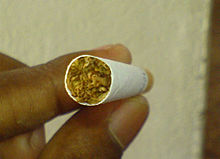
Smoking is the most common method of consuming tobacco, and tobacco is the most common substance smoked. The agricultural product is often mixed with other additives and then pyrolyzed. The resulting vapors are then inhaled and the active substances absorbed through the alveoli in the lungs. The active substances trigger chemical reactions in nerve endings, which heightens heart rate, memory, alertness, and reaction time. Dopamine and later endorphins are released, which are often associated with pleasure. As of 2000, smoking is practiced by some 1.22 billion people. Men are more likely to smoke than women, though the gender gap declines with younger age.
Many smokers begin during adolescence or early adulthood. Usually during the early stages, smoking provides pleasurable sensations, serving as a source of positive reinforcement. After an individual has smoked for many years, the avoidance of withdrawal symptoms and negative reinforcement become the key motivations to continue.
Consumption
Cigars are tightly rolled bundles of dried and fermented tobacco which are ignited so that smoke may be drawn into the smoker's mouth. They are generally not inhaled because the high alkalinity of the smoke, which can quickly become irritating to the trachea and lungs. The prevalence of cigar smoking varies depending on location, historical period, and population surveyed, and prevalence estimates vary somewhat depending on the survey method. The United States is the top consuming country by far, followed by Germany and the United Kingdom; the US and Western Europe account for about 75% of cigar sales worldwide. As of 2005 it is estimated that 4.3% of men and 0.3% of women smoke cigars.
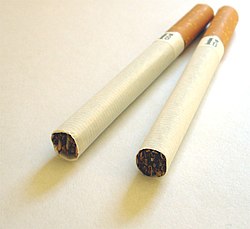
Cigarettes, French for "small cigar", are a product consumed through smoking and manufactured out of cured and finely cut tobacco leaves and reconstituted tobacco, often combined with other additives, which are then rolled or stuffed into a paper-wrapped cylinder. Cigarettes are ignited and inhaled, usually through a cellulose acetate filter, into the mouth and lungs.
Passive smoking is the involuntary consumption of smoked tobacco. Second-hand smoke (SHS) is the consumption where the burning end is present, environmental tobacco smoke (ETS) or third-hand smoke is the consumption of the smoke that remains after the burning end has been extinguished. Because of its negative implications, this form of consumption has played a central role in the regulation of tobacco products.
Pipe smoking typically consists of a small chamber (the bowl) for the combustion of the tobacco to be smoked and a thin stem (shank) that ends in a mouthpiece (the bit). Shredded pieces of tobacco are placed into the chamber and ignited. Tobaccos for smoking in pipes are often carefully treated and blended to achieve flavour nuances not available in other tobacco products.
Roll-Your-Own or hand-rolled cigarettes, often called 'rollies', are very popular particularly in European countries. These are prepared from loose tobacco, cigarette papers and filters all bought separately. They are usually much cheaper to make.
Physiology
The active substances in tobacco, especially cigarettes, are administered by burning the leaves and inhaling the vaporized gas that results. This quickly and effectively delivers substances into the bloodstream by absorption through the alveoli in the lungs. The lungs contain some 300 million alveoli, which amounts to a surface area of over 70 m2 (about the size of a tennis court). This method is inefficient as not all of the smoke will be inhaled, and some amount of the active substances will be lost in the process of combustion, pyrolysis. Pipe and Cigar smoke are not inhaled because of its high alkalinity, which are irritating to the trachea and lungs. However, because of its higher alkalinity (pH 8.5) compared to cigarette smoke (pH 5.3), unionized nicotine is more readily absorbed through the mucous membranes in the mouth. Nicotine absorption from cigar and pipe, however, is much less than that from cigarette smoke.
The inhaled substances trigger chemical reactions in nerve endings. The cholinergic receptors are often triggered by the naturally occurring neurotransmitter acetylcholine. Acetylcholine and Nicotine express chemical similarities, which allows Nicotine to trigger the receptor as well. These nicotinic acetylcholine receptors takes are located in the central nervous system and at the nerve-muscle junction of skeletal muscles; whose activity increases heart rate, alertness, and faster reaction times. Nicotine acetylcholine stimulation is not directly addictive. However, since dopamine-releasing neurons are abundant on nicotine receptors, dopamine is released. This release of dopamine, which is associated with pleasure, is reinforcing and may also increase working memory. Nicotine and cocaine activate similar patterns of neurons, which supports the idea that common substrates among these drugs.
When tobacco is smoked, most of the nicotine is pyrolyzed. However, a dose sufficient to cause mild somatic dependency and mild to strong psychological dependency remains. There is also a formation of harmane (a MAO inhibitor) from the acetaldehyde in tobacco smoke. This seems to play an important role in nicotine addiction—probably by facilitating a dopamine release in the nucleus accumbens as a response to nicotine stimuli. Using rat studies, withdrawal after repeated exposure to nicotine results in less responsive nucleus accumbens cells, which produce dopamine responsible for reinforcement.
Health
Tobacco use leads most commonly to diseases affecting the heart and lungs, with smoking being a major risk factor for heart attacks, strokes, chronic obstructive pulmonary disease (COPD), emphysema, and cancer (particularly lung cancer, cancers of the larynx and mouth, and pancreatic cancer). Cigarette smoking increases the risk of Crohn's disease as well as the severity of the course of the disease. It is also the number one cause of bladder cancer.
The World Health Organization estimate that tobacco caused 5.4 million deaths in 2004 and 100 million deaths over the course of the 20th century. Similarly, the United States Centers for Disease Control and Prevention describes tobacco use as "the single most important preventable risk to human health in developed countries and an important cause of premature death worldwide."
Rates of smoking have leveled off or declined in the developed world. Smoking rates in the United States have dropped by half from 1965 to 2006 falling from 42% to 20.8% in adults. In the developing world, tobacco consumption is rising by 3.4% per year. Passive smoking presents a very real health risk. 603,000 deaths were attributable to second-hand smoke in 2004.
Smoking cessation, referred to as "quitting" is the action leading towards abstinence of tobacco smoking. There are a number of methods such as cold turkey, nicotine replacement therapy, antidepressants, hypnosis, self-help, and support groups.


Reference: http://en.wikipedia.org/wiki/Tobacco_smoking
Images: http://commons.wikimedia.org/wiki/Category:Tobacco_smoking

Health Effects of Tobacco

The health effects of tobacco are the circumstances, mechanisms, and factors of tobacco consumption on human health. Epidemiological research has been focused primarily on tobacco smoking, which has been studied more extensively than any other form of consumption.
The World Health Organization (WHO) estimates that tobacco caused 5.4 million deaths in 2004 and 100 million deaths over the course of the 20th century. Similarly, the United States Centers for Disease Control and Prevention describes tobacco use as "the single most important preventable risk to human health in developed countries and an important cause of premature death worldwide."
Smoke contains several carcinogenic pyrolytic products that bind to DNA and cause many genetic mutations. There are over 19 known chemical carcinogens in cigarette smoke. Tobacco also contains nicotine, which is a highly addictive psychoactive chemical. When tobacco is smoked, nicotine causes physical and psychological dependency. Tobacco use is a significant factor in miscarriages among pregnant smokers, it contributes to a number of other threats to the health of the fetus such as premature births and low birth weight and increases by 1.4 to 3 times the chance for Sudden Infant Death Syndrome (SIDS). The result of scientific studies done in neonatal rats seems to indicate that exposure to cigarette smoke in the womb may reduce the fetal brain's ability to recognize hypoxic conditions, thus increasing the chance of accidental asphyxiation. Incidence of impotence is approximately 85 percent higher in male smokers compared to non-smokers, and is a key factor causing erectile dysfunction (ED).
Health Effects
A person's increased risk of contracting disease is directly proportional to the length of time that a person continues to smoke as well as the amount smoked. However, if someone stops smoking, then these chances gradually decrease as the damage to their body is repaired. A year after quitting, the risk of contracting heart disease is half that of a continuing smoker. The health risks of smoking are not uniform across all smokers. Risks vary according to amount of tobacco smoked, with those who smoke more at greater risk. Light smoking is still a health risk. Likewise, smoking "light" cigarettes does not reduce the risks.
Tobacco use most commonly leads to diseases affecting the heart and lungs, with smoking being a major risk factor for heart attacks, Chronic Obstructive Pulmonary Disease (COPD), emphysema, and cancer, particularly lung cancer, cancers of the larynx and mouth, and pancreatic cancer. Overall life expectancy is also reduced in regular smokers, with estimates ranging from 10 to 17.9 years fewer than nonsmokers. About two thirds of male smokers will die of illness due to smoking. The association of smoking with lung cancer is strongest, both in the public perception and etiologically. People who have smoked tobacco at some point have about a one in ten chance of developing lung cancer during their lifetime. If one looks at men who continue to smoke tobacco, the risk increases to one in six.
Mortality
Male and female smokers lose an average of 13.2 and 14.5 years of life, respectively.
According to the results of a 50 year study of 34,439 male British doctors, at least half of all life-long smokers die earlier as a result of smoking.
Smokers are three times as likely to die before the age of 60 or 70 as non-smokers.
In the United States alone, cigarette smoking and exposure to tobacco smoke accounts for roughly one in five, or at least 443,000 premature deaths annually.
"In the United States alone, tobacco kills the equivalent of three jumbo jets full of people crashing every day, with no survivors, 365 days of the year." -ABC's Peter Jennings On a worldwide basis, it's 1 jumbo jet per hour, 24 hours a day, 365 days of the year. -WHO
Cancer
The primary risks of tobacco usage include many forms of cancer, particularly lung cancer, kidney cancer, cancer of the larynx and head and neck, breast cancer, bladder cancer, cancer of the esophagus, cancer of the pancreas and stomach cancer.
There is some evidence suggesting an increased risk of myeloid leukemia, squamous cell sinonasal cancer, liver cancer, cervical cancer, colorectal cancer, ovarian cancer, and cancers of the gallbladder, the adrenal gland, the small intestine, and various childhood cancers.
The risk of dying from lung cancer before age 85 is 22.1% for a male smoker and 11.9% for a female smoker, in the absence of competing causes of death. The corresponding estimates for lifelong nonsmokers are a 1.1% probability of dying from lung cancer before age 85 for a man of European descent, and a 0.8% probability for a woman.
Cardiovascular
Inhalation of tobacco smoke causes several immediate responses within the heart and blood vessels. Within one minute the heart rate begins to rise, increasing by as much as 30 percent during the first 10 minutes of smoking. Carbon monoxide in tobacco smoke exerts its negative effects by reducing the blood’s ability to carry oxygen.
Smoking also increases the chance of heart disease, stroke, atherosclerosis, and peripheral vascular disease. Several ingredients of tobacco lead to the narrowing of blood vessels, increasing the likelihood of a blockage, and thus a heart attack or stroke. According to a study by an international team of researchers, people under 40 are five times more likely to have a heart attack if they smoke.
Smoking tends to increase blood cholesterol levels. Furthermore, the ratio of high-density lipoprotein (the "good" cholesterol) to low-density lipoprotein (the "bad" cholesterol) tends to be lower in smokers compared to non-smokers. Smoking also raises the levels of fibrinogen and increases platelet production (both involved in blood clotting) which makes the blood viscous. Carbon monoxide binds to hemoglobin (the oxygen-carrying component in red blood cells), resulting in a much stabler complex than hemoglobin bound with oxygen or carbon dioxide—the result is permanent loss of blood cell functionality. Blood cells are naturally recycled after a certain period of time, allowing for the creation of new, functional erythrocytes. However, if carbon monoxide exposure reaches a certain point before they can be recycled, hypoxia (and later death) occurs. Smoking also increases blood pressure and weakens blood vessels.
Renal
In addition to increasing the risk of kidney cancer, smoking can contribute to additional renal damage. Smokers are at a significantly increased risk for chronic kidney disease than non-smokers. A history of smoking encourages the progression of diabetic nephropathy.
Oral
Perhaps the most serious oral condition that can arise is that of oral cancer. However, smoking also increases the risk for various other oral diseases, some almost completely exclusive to tobacco users. The National Institutes of Health, through the National Cancer Institute, determined in 1998 that "cigar smoking causes a variety of cancers including cancers of the oral cavity (lip, tongue, mouth, throat), esophagus, larynx, and lung." Pipe smoking involves significant health risks, particularly oral cancer.
Smokers have significantly greater loss of bone height than nonsmokers, and the trend can be extended to pipe smokers to have more bone loss than nonsmokers. Smoking has been proven to be an important factor in the staining of teeth. Halitosis or bad breath is common among tobacco smokers. Tooth loss has been shown to be 2 to 3 times higher in smokers than in non-smokers. In addition, complications may further include leukoplakia, the adherent white plaques or patches on the mucous membranes of the oral cavity, including the tongue, and a loss of taste sensation or salivary changes.
Infection
Tobacco is also linked to susceptibility to infectious diseases, particularly in the lungs. Smoking more than 20 cigarettes a day increases the risk of tuberculosis by two to four times, and being a current smoker has been linked to a fourfold increase in the risk of invasive pneumococcal disease. It is believed that smoking increases the risk of these and other pulmonary and respiratory tract infections both through structural damage and through effects on the immune system. The usage of tobacco also increases rates of infection: common cold and bronchitis, chronic obstructive pulmonary disease, emphysema and chronic bronchitis in particular.
Female infertility
Smoking is harmful to the ovaries, potentially causing female infertility, and the degree of damage is dependent upon the amount and length of time a woman smokes. Nicotine and other harmful chemicals in cigarettes interfere with the body’s ability to create estrogen, a hormone that regulates folliculogenesis and ovulation. Also, cigarette smoking interferes with folliculogenesis, embryo transport, endometrial receptivity, endometrial angiogenesis, uterine blood flow and the uterine myometrium. Some damage is irreversible, but stopping smoking can prevent further damage. Smokers are 60% more likely to be infertile than non-smokers. Smoking reduces the chances of IVF producing a live birth by 34% and increases the risk of an IVF pregnancy miscarrying by 30%.
Psychological
Smokers often report that cigarettes help relieve feelings of stress. However, the stress levels of adult smokers are slightly higher than those of nonsmokers, adolescent smokers report increasing levels of stress as they develop regular patterns of smoking, and smoking cessation leads to reduced stress. Far from acting as an aid for mood control, nicotine dependency seems to exacerbate stress. This is confirmed in the daily mood patterns described by smokers, with normal moods during smoking and worsening moods between cigarettes. Thus, the apparent relaxant effect of smoking only reflects the reversal of the tension and irritability that develop during nicotine depletion. Dependent smokers need nicotine to remain feeling normal.
Immediate effects
Smokers report a variety of physical and psychological effects from smoking tobacco. Those new to smoking may experience nausea, dizziness, and rapid heart beat. The unpleasant symptoms will eventually vanish over time, with repeated use, as the body builds a tolerance to the chemicals in the cigarettes, such as nicotine.
Stress
Smokers report higher levels of everyday stress. Several studies have monitored feelings of stress over time and found reduced stress after quitting.
The deleterious mood effects of abstinence explain why smokers suffer more daily stress than non-smokers, and become less stressed when they quit smoking. Deprivation reversal also explains much of the arousal data, with deprived smokers being less vigilant and less alert than non-deprived smokers or non-smokers.
In pregnancy
A number of studies have shown that tobacco use is a significant factor in miscarriages among pregnant smokers, and that it contributes to a number of other threats to the health of the fetus. Second-hand smoke appears to present an equal danger to the fetus, as one study noted that "heavy paternal smoking increased the risk of early pregnancy loss”.


Reference: http://en.wikipedia.org/wiki/Health_effects_of_tobacco
Images: http://commons.wikimedia.org/wiki/Category:Health_effects_of_tobacco

Cigarette Smoking for Weight Loss

Cigarette Smoking for Weight Loss is a practice dating to early knowledge of nicotine as an appetite suppressant. Tobacco use was associated with appetite suppression among pre-Columbian indigenous Americans, and old world Europeans. For decades, tobacco companies have employed these connections between slimness and smoking in their advertisements, mainly in brands and advertisements targeting women and related body image issues. Culturally, the links between smoking cigarettes and controlling weight run deep. While it is unclear how many people begin or continue smoking because of weight concerns, research reveals that white female adolescents with established weight-related anxieties are particularly prone to initiate smoking.
Cultural connections between cigarettes and being thin are reinforced through mass media depictions of high levels of cigarette consumption among thin public figures, such as persons in the fashion industry.
Basic, though generally not extensive knowledge of nicotine’s effects upon the appetite also contributes to people smoking for weight control purposes. However, studies have not shown that people smoke exclusively to maintain or lose weight.
The Science of Nicotine-Related Appetite Suppression and Weight Control
Though smoking is widely discouraged by public health professionals for its countless negative health consequences, nicotine has been proven to be an appetite suppressant. Nicotine reduces appetite and can influence an individual’s eating habits. A study on nicotine’s effects on appetite demonstrated that “net effects of nicotine include elevated blood pressure, heart rate, and gastric motility while eliciting a sustained decreased in food intake. Autonomic, sensory, and enteric neurons each constitute potentially important loci for nicotine-mediated changes in feeding behavior.” Thus the cultural associations between smoking and weight control in part reflect the body’s physiological reactions to nicotine.
Nicotine gum has similar effects to cigarettes in terms of appetite suppression, and there are some people who do not smoke, but use nicotine gum for the purpose of weight control or weight loss.
Nicotine also can lower insulin levels in a person’s bloodstream, which can reduce cravings for sugary foods. Furthermore, “nicotine-triggered effects of adrenaline on the stomach’s musculature” lead to temporary feelings of subsided hunger. Other studies have shown that smokers expend more calories while engaged in activity, which echo conclusions that smokers experience heightened metabolic rates.
There is controversy concerning whether smokers are actually thinner than nonsmokers. Some studies have shown that smokers—including long term and current smokers—weigh less than nonsmokers, and gain less weight over time. Conversely, certain longitudinal studies have not shown correlation between weight loss and smoking at least among young persons. Accordingly, while the connection between nicotine and appetite suppression, as well as other physiological responses to nicotine consumption, has been established, whether these chemical and biological reactions translate to smokers being thinner than nonsmokers (at least concerning certain age groups), is still debated. Age may act as a compounding factor in some of these studies. Essentially, a causal relationship has not been explicitly established between physiological effects of nicotine and epidemiological findings about weight among smokers and nonsmokers.
Smoking and Perceptions of Weight Control among Adolescents
While most adults do not smoke for weight control, studies have shown that associations between tobacco use, being thin and desire for weight control do influence adolescents in terms of smoking behavior. Research demonstrates that adolescent girls that strongly value being thin are more likely to initiate smoking. Additionally, girls already engaged in risky behavior for weight control are at increased odds to begin smoking as well.
Further research needs to examine trends in ethnicity concerning women and smoking for weight control. So far, studies have shown that young white women may be more prone to use cigarettes to manage their weight. Advertisements for particular brands and types of cigarettes seem target this demographic accordingly.
Several studies have been conducted over the past decade examining this issue in depth. While it has generally been found that white females are more apt to smoke to lose weight, one study found that smoking to lose or control weight is not limited to white females, but is prevalent across racial and gender boundaries. Within all racial groups, it was found that weight concerns and negative body perceptions were a significant factor in an adolescent's decision to smoke. However, it should be noted that the relationship between weight and smoking amongst young men was only statistically significant in white or mixed race groups.
In the past, studies have shown that adolescent girls do consider weight loss or weight control to be one of the positive values of smoking. Overall, young women and girls concerned about weight control, particularly those already using unhealthy weight control techniques, are at a higher risk of smoking.
Smoking Cessation
Weight gain as a side effect of smoking cessation remains a major aspect of smoking and weight control. People can be discouraged by weight gain experienced while quitting smoking. Weight gain is a common experience during smoking cessation, with roughly 75% of smokers gaining weight after quitting. As nicotine is an appetite suppressant and smokers expend more energy, weight gain due to smoking cessation is generally attributed to increased caloric consumption and a slowed metabolic rate.
Weight gain can be a deterrent in the smoking cessation process, even if many smokers did not smoke for weight control purposes. Those in the process of quitting smoking are recommended to follow a healthy diet and to exercise regularly. Most quitting advice encourages people to not be discouraged should they experience weight gain while quitting smoking, as the health benefits of quitting almost always exceed the costs of weight gain. Studies have shown that weight gain during the smoking cessation process is often lost eventually through diet and exercise.
Conclusions
Some studies show that smokers do generally weigh less than nonsmokers, with other research proving that nicotine increases metabolic rate and suppresses appetite. However, the health costs of smoking vastly outweigh this supposed benefit of smoking.
As weight-related advertising has generally focused on women, research has shown that young women are particularly an at-risk population for smoking for weight control purposes, and more research needs to focus on gender and ethnic trends concerning adolescents and smoking, although tobacco companies are starting to aim advertisements at the gay community.
However, the reasons for which people smoke are ostensibly complex, and can rarely be attributed to just a desire to control or reduce body weight. That said, the legacy of the association between being thin and smoking has nevertheless impacted 20th century culture in countless ways.

Reference: http://en.wikipedia.org/wiki/Cigarette_smoking_for_weight_loss
Images: http://commons.wikimedia.org/wiki/

Effects of Smoking Cessation

Around 70 percent of all the smokers in the world want to give up the habit, because they know that smoking is bad for their health. If you’re reading this, you’re probably one of those people – and this plan should make it possible for you to achieve that gold.
Health Benefits

The immediate effects of smoking cessation include:
  • Within 20 minutes, blood pressure decreases, pulse returns to its normal level
  • After 8 hours, carbon monoxide levels in the blood return to normal, oxygen level increases
  • After 24 hours, chance of heart attack starts to decrease; breath, hair and body stop smelling like smoke
  • After 48 hours, damaged nerve endings begin to recover; sense of taste and smell improve
  • After 72 hours, the body is virtually free of nicotine; bronchial tubes relax, breathing becomes easier
  • After 2–12 weeks, lungs can hold more air, exercise becomes easier and circulation improves
Longer-term effects include:
  • After 1 year, the risk of coronary heart disease is cut in half
  • After 5 years, the risk of stroke falls to the same as a non-smoker
  • After 10 years, the risk of lung cancer is cut in half and the risk of other cancers decreases significantly
  • After 15 years, the risk of coronary heart disease drops, usually to the level of a non-smoker
Many of tobacco's health effects can be minimized through smoking cessation. The British doctors study showed that those who stopped smoking before they reached 30 years of age lived almost as long as those who never smoked. Smoking cessation will almost always lead to a longer and healthier life. Stopping in early adulthood can add up to 10 years of healthy life and stopping in one's sixties can still add three years of healthy life. Stopping smoking is associated with better mental health and spending less of one's life with diseases of old age.
Some research has indicated that some of the damage caused by smoking tobacco can be moderated with the use of antioxidants. Upon smoking cessation, the body begins to rid itself of foreign substances introduced through smoking. These include substances in the blood such as nicotine and carbon monoxide, and also accumulated particulate matter and tar from the lungs. As a consequence, though the smoker may begin coughing more, cardiovascular efficiency increases.
Many of the effects of smoking cessation can be seen as landmarks, often cited by smoking cessation services, by which a smoker can encourage himself to keep going. Some are of a certain nature, such as those of nicotine clearing the bloodstream completely in 48 to 72 hours, and cotinine (a metabolite of nicotine) clearing the bloodstream within 10 to 14 days. Other effects, such as improved circulation, are more variable in nature, and as a result less definite timescales are often cited.
All of this happens no matter how old you are, no matter how many cigarettes a day you smoke or how long you’ve been doing it for. It really is never too late to give up smoking, so why not make today the day you decide to stop?

Reference: http://en.wikipedia.org/wiki/Smoking_cessation
Images: http://commons.wikimedia.org/wiki/

Methods of Smoking Cessation

Smoking cessation (colloquially quitting) is the process of discontinuing the practice of inhaling a smoked substance. Smoking cessation programs mainly target tobacco smoking, but may also encompass other substances that can be difficult to stop using due to the development of strong physical addictions or psychological dependencies resulting from their habitual use. This article focuses exclusively on cessation of cigarette smoking. However, the methods described may apply to cessation of smoking other substances.
It is believed that very few smokers can successfully quit the habit in their very first attempt. Many studies indicated that many smokers find it difficult to quit, even after they get afflicted with tobacco related diseases. A serious commitment and resolve is required to arrest nicotine dependency.
  • In a growing number of countries, there are more ex-smokers than smokers. (In the U.S. as of 2010, 47 million ex-smokers and 46 million smokers.)
  • Up to three-quarters of ex-smokers have quit without assistance (“cold turkey” or cut down then quit), and unaided cessation is by far the most common method used by most successful ex-smokers.
  • A serious attempt at stopping need not involve using nicotine replacement therapy (NRT) or other drugs or getting professional support.
  • Early “failure” is a normal part of trying to stop. Many initial efforts are not serious attempts.
  • NRT, other prescribed pharmaceuticals, and professional counselling or support also help many smokers, but are certainly not necessary for quitting.
Tobacco contains the chemical nicotine. Smoking cigarettes leads to a dependence on nicotine. Cessation of smoking leads to physiological symptoms of withdrawal. Methods of smoking cessation must address this dependency and subsequent withdrawal symptoms.
Preparation
First, you need to start preparing yourself. Getting into the right mind set to stop smoking is very important. You have to be focused on what you are doing, why you’re doing it and how you’re doing it. Having all this sorted out will make sticking to the program much easier. The good news is all this takes just two steps.
Step 1: Decide why you want to quit smoking and write those reasons down – all of them. If you get stuck, think about headings like Health, Looks, Finances, Family, Things I’ll be able to do. Now copy these reasons onto another piece of paper headed ‘What Will Happen When I’ve Stopped Smoking’, but change the wording of any negative statements into something positive. For example, if you’ve written ‘I won’t have to spend money on cigarettes’, change that to ‘I will have extra money to spend on anything I like’. Or, if one of your reasons is ‘I won’t cough every morning’, change that to ‘My lungs will feel healthier and less congested’. It may sound strange, but, psychologically, positive thinking is usually much more effective than negative. Every morning, read that piece of paper and focus on each of the statements.
Step 2: Now you need to decide how you are going to stop smoking. There are a few methods that you can use, but three work best with the Stop Smoking Plan.
Methods of smoking cessation
Robert West and Saul Shiffman have authored works on smoking cessation. They believe that, used together, "behavioral support" and "medication" can quadruple the chances that a quit attempt will be successful. Both, however, disclosed that they are paid researchers or consultants to pharmaceutical companies or manufacturers of smoking cessation medications.
Cold turkey
"Cold turkey" is abrupt cessation of all nicotine use. It is the quitting method used by 80% to 90% of long-term successful quitters in some populations. It’s a good approach, but it’s also the most intense because you will probably suffer strong nicotine withdrawal for 24-48 hours and milder symptoms for a week to ten days. Using the diet detailed over the page will help reduce these, which will make things easier. You should start the diet the day before you decide to stop, then stick to it for at least a fortnight. Also use the controlling cravings tips to help you tackle any urges to smoke that you may develop and keep this up for the next five weeks.
In a large British study of ex-smokers in the 1980s, before the advent of pharmacotherapy, 53% of the ex-smokers said that it was “not at all difficult” to stop, 27% said it was “fairly difficult”, and the remainder found it very difficult. Methods advanced by J. Wayne McFarland and Elman J. Folkenburg (an M.D. and a pastor who wrote their Five Day Plan in about 1959), Joel Spitzer and John R. Polito (smoking cessation educators whose work is free at WhyQuit.com) and Allen Carr (who founded Easyway® during the early 1980s) are cold turkey plans.
Cut down to quit
Gradual reduction involves slowly reducing one's daily intake of nicotine. This can be done in two ways: by repeated changes to cigarettes with lower levels of nicotine, or by gradually reducing the number of cigarettes smoked each day. As of 2010, and unlike earlier studies who claimed some benefit for gradual reduction, a Cochrane review found that abrupt cessation and gradual reduction with pre-quit NRT produced similar quit rates.
Many experts say this is one of the hardest ways to give up smoking because it just prolongs your addiction. However, if you’re afraid of withdrawal, it can give you a safety net. If you’re going to use this method, you’ll be on the diet for five weeks. While you do this, you should aim to reduce the number of cigarettes you smoke progressively by one-fifth per week. For a 20-a-day smoker, this means either reducing your intake by four cigarettes a day for the whole week (that is, reduce to 16 per day for the first week, 12 per day for the second week, and so on), or cutting down progressively by one cigarette a day on the first four days of the week (that is, 19 on Monday, 18 on Tuesday, 17 on Wednesday, 16 on Thursday, stay at that level for Friday to Sunday, then start reducing again on Monday).
Start with the cigarettes you feel you need most first because if you can break the habit of these, while you have the safety net of being able to smoke if you want one, it’s going to be much easier when you get to the last week. Also use the controlling cravings tips to keep you from lighting up when you shouldn’t.
Pharmacological
The U.S. Food and Drug Administration has approved seven medications for treating nicotine addiction. All of these helped with withdrawal symptoms and cravings.
Nicotine replacement therapy (NRT) Five of the approved medications are different methods of delivering nicotine in a form that does not involve the risks of smoking. The five NRT medications, which Cochrane found in 1996 increased the chances of stopping smoking by 50 to 70% compared to placebo or to no treatment, are:
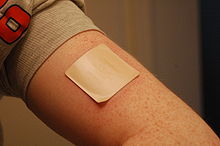
1) transdermal nicotine patches deliver doses of the addictive chemical nicotine, thus reducing the unpleasant effects of nicotine withdrawal. These patches can give smaller and smaller doses of nicotine, slowly reducing dependence upon nicotine and thus tobacco. Cochrane found further increased chance of success in a combination of the nicotine patch and a faster acting form. Also, this method becomes most effective when combined with other medication and psychological support.
2) gum
3) lozenges
4) sprays
5) inhalers
A study found that 93 percent of over-the-counter NRT users relapse and return to smoking within six months. If you are using NRT, the controlling cravings section is the most important part of the plan for you. Use NRT for as long as you need; then, as you start to come off it, you should begin to use the diet to help you beat the withdrawal symptoms that will occur.
Alternative medical approaches
  • Hypnosis clinical trials studying hypnosis as a method for smoking cessation have been inconclusive although many people have successfully quit smoking using hypnosis and hypnotherapy.
  • Aromatherapy based treatments and herbal preparations such as Kava and Chamomile, the efficacy of which has not been established.
  • Acupuncture clinical trials have shown that acupuncture's effect on smoking cessation is equal to that of sham/placebo acupuncture.
  • Laser therapy based on acupuncture principles but without the needles.


Reference: http://en.wikipedia.org/wiki/Smoking_cessation
Images: http://commons.wikimedia.org/wiki/