Showing posts with label Strawberry-Tomato-Watermelon. Show all posts

Monday, December 6, 2010

Healthy Fruit: Watermelon

Watermelon (Citrullus lanatus, family Cucurbitaceae) can be both the fruit and the plant of a vine-like (scrambler and trailer) plant originally from southern Africa, and is one of the most common types of melon. This flowering plant produces a special type of fruit known by botanists as a pepo, a berry which has a thick rind (exocarp) and fleshy center (mesocarp and endocarp); pepos are derived from an inferior ovary, and are characteristic of the Cucurbitaceae. The watermelon fruit, loosely considered a type of melon (although not in the genus Cucumis), has a smooth exterior rind (green, yellow and sometimes white) and a juicy, sweet interior flesh (usually pink, but sometimes orange, yellow, red and sometimes green if not ripe). It is also commonly used to make a variety of salads, most notably fruit salad.
By the 10th century AD, watermelons were being cultivated in China, which is today the world's single largest watermelon producer. By the 13th century, Moorish invaders had introduced the fruit to Europe; according to John Mariani's The Dictionary of American Food and Drink, "watermelon" made its first appearance in an English dictionary in 1615.
Today, farmers in approximately 44 states in the U.S. grow watermelon commercially, and almost all these varieties have some Charleston Gray in their lineage. Georgia, Florida, Texas, California and Arizona are the USA's largest watermelon producers. This now-common watermelon is often large enough that groceries often sell half or quarter melons. There are also some smaller, spherical varieties of watermelon, both red- and yellow-fleshed, sometimes called "icebox melons".
In Japan, farmers of the Zentsuji region found a way to grow cubic watermelons, by growing the fruits in glass boxes and letting them naturally assume the shape of the receptacle. The square shape is designed to make the melons easier to stack and store, but the square watermelons are often more than double the price of normal ones. Pyramid shaped watermelons have also been developed and any polyhedral shape may potentially also be used.
There are more than 1200 varieties of watermelon ranging in size from less than a pound, to more than two hundred pounds, with flesh that is red, orange, yellow or white. Several notable varieties are included here.
  • Carolina Cross: This variety of watermelon produced the current world record watermelon weighing 262 pounds (119 kg). It has green skin, red flesh and commonly produces fruit between 65 and 150 pounds (29 and 68 kg). It takes about 90 days from planting to harvest.
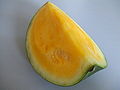
  • Yellow Crimson Watermelon: variety of watermelon that has a yellow colored flesh. This particular type of watermelon has been described as "sweeter" and more "honey" flavored than the more popular red flesh watermelon.
  • Orangeglo: This variety has a very sweet orange pulp, and is a large oblong fruit weighing 9–14 kg (20–30 pounds). It has a light green rind with jagged dark green stripes. It takes about 90–100 days from planting to harvest.
  • The Moon and Stars variety of watermelon has been around since 1926. The rind is purple/black and has many small yellow circles (stars) and one or two large yellow circles (moon). The melon weighs 9–23 kg (20–50 pounds). The flesh is pink or red and has brown seeds. The foliage is also spotted. The time from planting to harvest is about 90 days.
  • Cream of Saskatchewan: This variety consists of small round fruits, around 25 cm (10 inches) in diameter. It has a quite thin, light green with dark green striped rind, with sweet white flesh and black seeds. It can grow well in cool climates. It was originally brought to Saskatchewan, Canada by Russian immigrants. These melons take 80–85 days from planting to harvest.
  • Melitopolski: This variety has small round fruits roughly 28–30 cm (11–12 inches) in diameter. It is an early ripening variety that originated from the Volga River region of Russia, an area known for cultivation of watermelons. The Melitopolski watermelons are seen piled high by vendors in Moscow in summer. This variety takes around 95 days from planting to harvest.
  • Densuke Watermelon: This variety has round fruit up to 25 lb (11 kg). The rind is black with no stripes or spots. It is only grown on the island of Hokkaido, Japan, where up to 10,000 watermelons are produced every year. In June 2008, one of the first harvested watermelons was sold at an auction for 650,000 yen (6,300 USD), making the most expensive watermelon ever sold. The average selling price is generally around 25,000 yen (250 USD).
Nutrition
A watermelon contains about 6% sugar and 92% water by weight. As with many other fruits, it is a source of vitamin C.
Notable is the inner rind of the watermelon, which is usually a light green or white color. This area is edible and contains many hidden nutrients that most people avoid eating due to its unappealing flavor.
The amino acid citrulline was first extracted from watermelon and analysed. Watermelons contain a significant amount of citrulline and after consumption of several kg, an elevated concentration is measured in the blood plasma; this could be mistaken for citrullinaemia or other urea cycle disorders.
Watermelon rinds are also edible, and sometimes used as a vegetable. In China, they are stir-fried, stewed or more often pickled. When stir-fried, the de-skinned and de-fruited rind is cooked with olive oil, garlic, chili peppers, scallions, sugar and rum. Pickled watermelon rind is also commonly consumed in the Southern US. Watermelon juice can also be made into wine.
Watermelon is also mildly diuretic.
Watermelons contain large amounts of beta carotene.
Watermelon with red flesh is a significant source of lycopene.
Watermelon, raw (edible parts)
Nutritional value per 100 g (3.5 oz)
Energy 127 kJ (30 kcal) | Carbohydrates 7.55 g
Sugars 6.2 g | Dietary fiber 0.4 g
Fat 0.15 g | Protein 0.61 g | Water 91.45 g
Vitamin A equiv. 28 μg (3%) | Vitamin C 8.1 mg (14%)
Thiamine (Vit. B1) 0.033 mg (3%)
Riboflavin (Vit. B2) 0.021 mg (1%)
Niacin (Vit. B3) 0.178 mg (1%)
Pantothenic acid (B5) 0.221 mg (4%)
Vitamin B6 0.045 mg (3%) | Folate (Vit. B9) 3 μg (1%)
Calcium 7 mg (1%) | Iron 0.24 mg (2%)
Magnesium 10 mg (3%) | Phosphorus 11 mg (2%)
Potassium 112 mg (2%) | Zinc 0.10 mg (1%)
Percentages are relative to US recommendations for adults.
Source: USDA Nutrient database


Source, Images: http://en.wikipedia.org/wiki/Watermelon
Healthy Fruit: Tomato

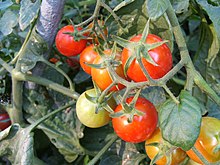
The tomato is a savory, typically red, edible fruit, as well as the plant (Solanum lycopersicum) which bears it. Originating in South America, the tomato was spread around the world following the Spanish colonization of the Americas, and its many varieties are now widely grown, often in greenhouses in cooler climates. The tomato fruit is consumed in diverse ways, including raw, as an ingredient in many dishes and sauces, and in drinks. While it is botanically a fruit, it is considered a vegetable for culinary purposes, which has caused some confusion. The fruit is rich in lycopene, which may have beneficial health effects.
The tomato belongs to the nightshade family. The plants typically grow to 1–3 metres (3–10 ft) in height and have a weak, woody stem that often vines over other plants. It is a perennial, although often grown outdoors in temperate climates as an annual.
The tomato is native to South America. Genetic evidence shows the progenitors of tomatoes were herbaceous green plants with small green fruit and a center of diversity in the highlands of Peru. One species, Solanum lycopersicum, was transported to Mexico where it was grown and consumed by Mesoamerican civilizations. The exact date of domestication is not known. The first domesticated tomato may have been a little yellow fruit, similar in size to a cherry tomato, grown by the Aztecs of Central Mexico. Aztec writings mention tomatoes were prepared with peppers, corn and salt. The word tomato comes from the Aztec tomatl, literally "the swelling fruit".
The tomato is now grown worldwide for its edible fruits, with thousands of cultivars having been selected with varying fruit types, and for optimum growth in differing growing conditions. Cultivated tomatoes vary in size from tomberries, about 5mm in diameter, through cherry tomatoes, about the same 1–2 centimetres (0.4–0.8 in) size as the wild tomato, up to beefsteak tomatoes 10 centimetres (4 in) or more in diameter. The most widely grown commercial tomatoes tend to be in the 5–6 centimetres (2.0–2.4 in) diameter range. Most cultivars produce red fruit; but a number of cultivars with yellow, orange, pink, purple, green, black, or white fruit are also available. Multicolored and striped fruit can also be quite striking. Tomatoes grown for canning and sauces are often elongated, 7–9 centimetres (3–4 in) long and 4–5 centimetres (1.6–2.0 in) diameter; they are known as plum tomatoes, and have a lower water content.
About 130 million tons of tomatoes were produced in the world in 2008. China, the largest producer, accounted for about one quarter of the global output, followed by United States and Turkey. For one variety, known as plum or processing tomatoes, California accounts for 90% of U.S. production and 35% of world production. There are many (around 7500) tomato varieties grown for various purposes. Tomato varieties are roughly divided into several categories, based mostly on shape and size.
  • "Slicing" or "globe" tomatoes are the usual tomatoes of commerce, used for a wide variety of processing and fresh eating.
  • Beefsteak tomatoes are large tomatoes often used for sandwiches and similar applications. Their kidney-bean shape, thinner skin, and shorter shelf life makes commercial use impractical.
  • Oxheart tomatoes can range in size up to beefsteaks, and are shaped like large strawberries.
  • Plum tomatoes, or paste tomatoes (including pear tomatoes), are bred with a higher solid content for use in tomato sauce and paste and are usually oblong.
  • Pear tomatoes are obviously pear shaped and based upon the San Marzano types for a richer gourmet paste.
  • Cherry tomatoes are small and round, often sweet tomatoes generally eaten whole in salads.
  • Grape tomatoes, a more recent introduction, are smaller and oblong, a variation on plum tomatoes, and used in salads.
  • Campari tomatoes are also sweet and noted for their juiciness, low acidity, and lack of mealiness. They are bigger than cherry tomatoes, but are smaller than plum tomatoes.
Early tomatoes and cool-summer tomatoes bear fruit even where nights are cool, which usually discourages fruit set. There are also varieties high in beta carotenes and vitamin A, hollow tomatoes and tomatoes which keep for months in storage. Tomatoes that are not yet ripe are optimally stored at room temperature uncovered, out of direct sunlight, until ripe. In this environment, they have a shelf life of 3 to 4 days. When ripe, they should be used 1 to 2 days. Tomatoes should only be refrigerated when well ripened, but this will affect flavor.
The tomato is now grown and eaten around the world. It is used in diverse ways, including raw in salads, and processed into ketchup or tomato soup. Unripe green tomatoes can also be breaded and fried, used to make salsa, or pickled. Tomato juice is sold as a drink, and is used in cocktails such as the Bloody Mary. Tomatoes are acidic, making them especially easy to preserve in home canning whole, in pieces, as tomato sauce or paste. The fruit is also preserved by drying, often in the sun, and sold either in bags or in jars with oil.
Tomatoes are used extensively in Mediterranean cuisine, especially Italian and Middle Eastern cuisines. They are a key ingredient in pizza, and is commonly used in pasta sauces. They are also used in gazpacho (Spanish cuisine) and pa amb tomaquet (Catalan cuisine). Though it is botanically a berry, a subset of fruit, the tomato is a vegetable for culinary purposes, because of its savory flavor.
Fruit or Vegetable ?
Botanically, a tomato is a fruit: the ovary, together with its seeds, of a flowering plant. However, the tomato has a much lower sugar content than other fruits, and is therefore not as sweet. Typically served as part of a salad or main course of a meal, rather than at dessert, it is considered a vegetable for most culinary purposes. One exception is that tomatoes are treated as a fruit in home canning practices: they are acidic enough to be processed in a water bath rather than a pressure cooker as "vegetables" require. Tomatoes are not the only foodstuff with this ambiguity: eggplants, cucumbers, and squashes of all kinds (such as zucchini and pumpkins) are all botanically fruits, yet cooked as vegetables.
Tomatoes have been designated the state vegetable of New Jersey. Arkansas took both sides by declaring the "South Arkansas Vine Ripe Pink Tomato" to be both the state fruit and the state vegetable in the same law, citing both its culinary and botanical classifications. In 2009, the state of Ohio passed a law making the tomato the state's official fruit. Tomato juice has been the official beverage of Ohio since 1965. A.W. Livingston, of Reynoldsburg, Ohio, played a large part in popularizing the tomato in the late 19th century, his efforts are commemorated in Reynoldsburg with an annual Tomato Festival. In 2001 the Council of the European Union in a directive stated that tomatoes should be considered fruits.
Nutrition
Tomatoes are now eaten freely throughout the world, and their consumption is believed to benefit the heart among other things. They contain lycopene, one of the most powerful natural antioxidants. In some studies lycopene, especially in cooked tomatoes, has been found to help prevent prostate cancer but other research contradicts this claim. Lycopene has also been shown to improve the skin's ability to protect against harmful UV rays. Natural genetic variation in tomatoes and their wild relatives has given a genetic treasure trove of genes that produce lycopene, carotene, anthocyanin, and other antioxidants. Tomato varieties are available with double the normal vitamin C (Doublerich), 40 times normal vitamin A (97L97), high levels of anthocyanin (P20 Blue), and two to four times the normal amount of lycopene (numerous available cultivars with the high crimson gene).
Tomato consumption has been associated with decreased risk of breast cancer, head and neck cancers and might be strongly protective against neurodegenerative diseases.
Red Tomatoes, raw : Nutritional value per 100 g (3.5 oz)
Energy 75 kJ (18 kcal) | Carbohydrates 4 g
Sugars 2.6 g | Dietary fiber 1 g
Fat 0.2 g | Protein 1 g | Water 95 g
Vitamin C 13 mg (22%)
Percentages are relative to US recommendations for adults.
Source: USDA Nutrient database


Source, Images: http://en.wikipedia.org/wiki/Tomato

Healthy Fruit: Strawberry

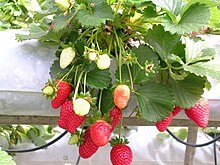
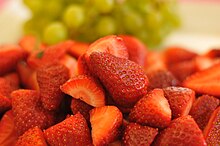
The garden strawberry is a common plant of the genus Fragaria cultivated worldwide for its aggregate accessory fruit, the (common) strawberry. The fruit is widely appreciated, mainly for its characteristic aroma but also for its bright red color, and it is consumed in large quantities, either fresh or in prepared foods such as preserves, fruit juice, pies, ice creams, and milk shakes. Artificial strawberry aroma is also widely used in all sorts of industrialized food products.
The garden strawberry was first bred in Brittany, France, in 1740 via a cross of Fragaria virginiana from eastern North America , which was noted for its flavor, and Fragaria chiloensis from Chile and Argentina brought by Amedee-Francois Frezier, which was noted for its large size. Cultivars of Fragaria × ananassa have replaced, in commercial production, the woodland strawberry, which was the first strawberry species cultivated in the early 17th century.
The strawberry is, in technical terms, an aggregate accessory fruit, meaning that the fleshy part is derived not from the plant's ovaries (achenes) but from the receptacle that holds the ovaries. Each "seed" on the outside of the fruit is actually one of the ovaries of the flower, with a seed inside it. In both culinary and botanical terms, the entire thing is called a "fruit".
Strawberry cultivars vary remarkably in size, color, flavor, shape, degree of fertility, season of ripening, liability to disease and constitution of plant. Some vary in foliage, and some vary materially in the relative development of their sexual organs. In most cases the flowers appear hermaphroditic in structure, but function as either male or female.
For purposes of commercial production, plants are propagated from runners and, in general, distributed as either bare root plants or plugs. Cultivation follows one of two general models, annual plasticulture or a perennial system of matted rows or mounds. A small amount of strawberries are also produced in greenhouses during the off season.
Strawberries may also be propagated by seed, though this is primarily a hobby activity, and is not widely practiced commercially. A few seed-propagated cultivars have been developed for home use, and research into growing from seed commercially is ongoing. Seeds (achenes) are acquired either via commercial seed suppliers, or by collecting and saving them from the fruit. Strawberries can also be grown indoors in strawberry pots.
Strawberries are an easy plant to grow, and can be grown almost anywhere in the world. The best thing to do is to buy a plant in early to middle spring. Place the plant preferably in full sun, and in somewhat sandy soil. Strawberries are a strong plant that will survive many conditions, but, during the time that the plant is forming fruit, it is important for it to get enough water. Strawberries can also be grown as a potted plant, and will still produce fruit.
A strawberry plant will send out shoots in an attempt to propagate a new plant, and, if left alone, it will be successful in doing so, but this shoot can be cut off, and placed wherever you wish to start a new plant.
In addition to being consumed fresh, strawberries can be frozen, made into preserves, as well as dried and used in such things as cereal bars. Strawberries are a popular addition to dairy products, as in strawberry-flavored ice cream, milkshakes, smoothies, and yogurts. Strawberries and Cream is a popular dessert, famously consumed at Wimbledon. Strawberry pie is also popular. Strawberries can be dipped in melted chocolate fondue as a healthier way to enjoy chocolate.
Strawberry pigment extract can be used as a natural acid/base indicator due to the different color of the conjugate acid and conjugate base of the pigment. One cup (144 g) of strawberries contains approximately 45 calories (188 kJ) and is an excellent source of vitamin C and flavonoids.

Nutritional value per one cup (144 g) of Strawberries
Energy 181 kJ (43 kcal) | Carbohydrates 10.1 g
Dietary fiber 3.3 g | Water 132 g | Fat 0.53 g
Saturated 0.03 g | monounsaturated 0.075 g
Polyunsaturated 0.27 g | Protein 0.88 g
Thiamine (Vit. B1) 0.03 mg | Riboflavin (Vit. B2) 0.1 mg
Niacin (Vit. B3) 0.33 mg | Pantothenic acid (B5) 0.49 mg
Vitamin B6 0.09 mg | Folate (Vit. B9) 25 μg
Vitamin A 39 IU | Vitamin A, RE  4.3 μg
Vitamin C 82 mg | Vitamin E 0.20 mg
Calcium 20 mg | Copper 0.07 mg
Iron 0.55 mg | Magnesium 14 mg
Manganese 0.42 mg | Phosphorus 27 mg
Potassium 240 mg | Selenium 1.01 μg
Sodium 1.44 mg | Zinc 0.19 mg


Source, Images: http://en.wikipedia.org/wiki/Strawberry