Sunday, February 13, 2011

Effects of Smoking Cessation

Around 70 percent of all the smokers in the world want to give up the habit, because they know that smoking is bad for their health. If you’re reading this, you’re probably one of those people – and this plan should make it possible for you to achieve that gold.
Health Benefits

The immediate effects of smoking cessation include:
  • Within 20 minutes, blood pressure decreases, pulse returns to its normal level
  • After 8 hours, carbon monoxide levels in the blood return to normal, oxygen level increases
  • After 24 hours, chance of heart attack starts to decrease; breath, hair and body stop smelling like smoke
  • After 48 hours, damaged nerve endings begin to recover; sense of taste and smell improve
  • After 72 hours, the body is virtually free of nicotine; bronchial tubes relax, breathing becomes easier
  • After 2–12 weeks, lungs can hold more air, exercise becomes easier and circulation improves
Longer-term effects include:
  • After 1 year, the risk of coronary heart disease is cut in half
  • After 5 years, the risk of stroke falls to the same as a non-smoker
  • After 10 years, the risk of lung cancer is cut in half and the risk of other cancers decreases significantly
  • After 15 years, the risk of coronary heart disease drops, usually to the level of a non-smoker
Many of tobacco's health effects can be minimized through smoking cessation. The British doctors study showed that those who stopped smoking before they reached 30 years of age lived almost as long as those who never smoked. Smoking cessation will almost always lead to a longer and healthier life. Stopping in early adulthood can add up to 10 years of healthy life and stopping in one's sixties can still add three years of healthy life. Stopping smoking is associated with better mental health and spending less of one's life with diseases of old age.
Some research has indicated that some of the damage caused by smoking tobacco can be moderated with the use of antioxidants. Upon smoking cessation, the body begins to rid itself of foreign substances introduced through smoking. These include substances in the blood such as nicotine and carbon monoxide, and also accumulated particulate matter and tar from the lungs. As a consequence, though the smoker may begin coughing more, cardiovascular efficiency increases.
Many of the effects of smoking cessation can be seen as landmarks, often cited by smoking cessation services, by which a smoker can encourage himself to keep going. Some are of a certain nature, such as those of nicotine clearing the bloodstream completely in 48 to 72 hours, and cotinine (a metabolite of nicotine) clearing the bloodstream within 10 to 14 days. Other effects, such as improved circulation, are more variable in nature, and as a result less definite timescales are often cited.
All of this happens no matter how old you are, no matter how many cigarettes a day you smoke or how long you’ve been doing it for. It really is never too late to give up smoking, so why not make today the day you decide to stop?

Reference: http://en.wikipedia.org/wiki/Smoking_cessation
Images: http://commons.wikimedia.org/wiki/

Methods of Smoking Cessation

Smoking cessation (colloquially quitting) is the process of discontinuing the practice of inhaling a smoked substance. Smoking cessation programs mainly target tobacco smoking, but may also encompass other substances that can be difficult to stop using due to the development of strong physical addictions or psychological dependencies resulting from their habitual use. This article focuses exclusively on cessation of cigarette smoking. However, the methods described may apply to cessation of smoking other substances.
It is believed that very few smokers can successfully quit the habit in their very first attempt. Many studies indicated that many smokers find it difficult to quit, even after they get afflicted with tobacco related diseases. A serious commitment and resolve is required to arrest nicotine dependency.
  • In a growing number of countries, there are more ex-smokers than smokers. (In the U.S. as of 2010, 47 million ex-smokers and 46 million smokers.)
  • Up to three-quarters of ex-smokers have quit without assistance (“cold turkey” or cut down then quit), and unaided cessation is by far the most common method used by most successful ex-smokers.
  • A serious attempt at stopping need not involve using nicotine replacement therapy (NRT) or other drugs or getting professional support.
  • Early “failure” is a normal part of trying to stop. Many initial efforts are not serious attempts.
  • NRT, other prescribed pharmaceuticals, and professional counselling or support also help many smokers, but are certainly not necessary for quitting.
Tobacco contains the chemical nicotine. Smoking cigarettes leads to a dependence on nicotine. Cessation of smoking leads to physiological symptoms of withdrawal. Methods of smoking cessation must address this dependency and subsequent withdrawal symptoms.
Preparation
First, you need to start preparing yourself. Getting into the right mind set to stop smoking is very important. You have to be focused on what you are doing, why you’re doing it and how you’re doing it. Having all this sorted out will make sticking to the program much easier. The good news is all this takes just two steps.
Step 1: Decide why you want to quit smoking and write those reasons down – all of them. If you get stuck, think about headings like Health, Looks, Finances, Family, Things I’ll be able to do. Now copy these reasons onto another piece of paper headed ‘What Will Happen When I’ve Stopped Smoking’, but change the wording of any negative statements into something positive. For example, if you’ve written ‘I won’t have to spend money on cigarettes’, change that to ‘I will have extra money to spend on anything I like’. Or, if one of your reasons is ‘I won’t cough every morning’, change that to ‘My lungs will feel healthier and less congested’. It may sound strange, but, psychologically, positive thinking is usually much more effective than negative. Every morning, read that piece of paper and focus on each of the statements.
Step 2: Now you need to decide how you are going to stop smoking. There are a few methods that you can use, but three work best with the Stop Smoking Plan.
Methods of smoking cessation
Robert West and Saul Shiffman have authored works on smoking cessation. They believe that, used together, "behavioral support" and "medication" can quadruple the chances that a quit attempt will be successful. Both, however, disclosed that they are paid researchers or consultants to pharmaceutical companies or manufacturers of smoking cessation medications.
Cold turkey
"Cold turkey" is abrupt cessation of all nicotine use. It is the quitting method used by 80% to 90% of long-term successful quitters in some populations. It’s a good approach, but it’s also the most intense because you will probably suffer strong nicotine withdrawal for 24-48 hours and milder symptoms for a week to ten days. Using the diet detailed over the page will help reduce these, which will make things easier. You should start the diet the day before you decide to stop, then stick to it for at least a fortnight. Also use the controlling cravings tips to help you tackle any urges to smoke that you may develop and keep this up for the next five weeks.
In a large British study of ex-smokers in the 1980s, before the advent of pharmacotherapy, 53% of the ex-smokers said that it was “not at all difficult” to stop, 27% said it was “fairly difficult”, and the remainder found it very difficult. Methods advanced by J. Wayne McFarland and Elman J. Folkenburg (an M.D. and a pastor who wrote their Five Day Plan in about 1959), Joel Spitzer and John R. Polito (smoking cessation educators whose work is free at WhyQuit.com) and Allen Carr (who founded Easyway® during the early 1980s) are cold turkey plans.
Cut down to quit
Gradual reduction involves slowly reducing one's daily intake of nicotine. This can be done in two ways: by repeated changes to cigarettes with lower levels of nicotine, or by gradually reducing the number of cigarettes smoked each day. As of 2010, and unlike earlier studies who claimed some benefit for gradual reduction, a Cochrane review found that abrupt cessation and gradual reduction with pre-quit NRT produced similar quit rates.
Many experts say this is one of the hardest ways to give up smoking because it just prolongs your addiction. However, if you’re afraid of withdrawal, it can give you a safety net. If you’re going to use this method, you’ll be on the diet for five weeks. While you do this, you should aim to reduce the number of cigarettes you smoke progressively by one-fifth per week. For a 20-a-day smoker, this means either reducing your intake by four cigarettes a day for the whole week (that is, reduce to 16 per day for the first week, 12 per day for the second week, and so on), or cutting down progressively by one cigarette a day on the first four days of the week (that is, 19 on Monday, 18 on Tuesday, 17 on Wednesday, 16 on Thursday, stay at that level for Friday to Sunday, then start reducing again on Monday).
Start with the cigarettes you feel you need most first because if you can break the habit of these, while you have the safety net of being able to smoke if you want one, it’s going to be much easier when you get to the last week. Also use the controlling cravings tips to keep you from lighting up when you shouldn’t.
Pharmacological
The U.S. Food and Drug Administration has approved seven medications for treating nicotine addiction. All of these helped with withdrawal symptoms and cravings.
Nicotine replacement therapy (NRT) Five of the approved medications are different methods of delivering nicotine in a form that does not involve the risks of smoking. The five NRT medications, which Cochrane found in 1996 increased the chances of stopping smoking by 50 to 70% compared to placebo or to no treatment, are:
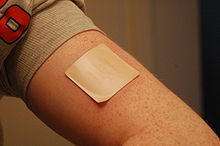
1) transdermal nicotine patches deliver doses of the addictive chemical nicotine, thus reducing the unpleasant effects of nicotine withdrawal. These patches can give smaller and smaller doses of nicotine, slowly reducing dependence upon nicotine and thus tobacco. Cochrane found further increased chance of success in a combination of the nicotine patch and a faster acting form. Also, this method becomes most effective when combined with other medication and psychological support.
2) gum
3) lozenges
4) sprays
5) inhalers
A study found that 93 percent of over-the-counter NRT users relapse and return to smoking within six months. If you are using NRT, the controlling cravings section is the most important part of the plan for you. Use NRT for as long as you need; then, as you start to come off it, you should begin to use the diet to help you beat the withdrawal symptoms that will occur.
Alternative medical approaches
  • Hypnosis clinical trials studying hypnosis as a method for smoking cessation have been inconclusive although many people have successfully quit smoking using hypnosis and hypnotherapy.
  • Aromatherapy based treatments and herbal preparations such as Kava and Chamomile, the efficacy of which has not been established.
  • Acupuncture clinical trials have shown that acupuncture's effect on smoking cessation is equal to that of sham/placebo acupuncture.
  • Laser therapy based on acupuncture principles but without the needles.


Reference: http://en.wikipedia.org/wiki/Smoking_cessation
Images: http://commons.wikimedia.org/wiki/

Stop Smoking Diet

All foods have the ability to create within us an acid or alkaline state, and this acid/alkaline balance is the key to this diet.
When doctors at Columbia University, USA measured the acidity or alkalinity of smokers’ bodies, they found that those with the highest acid balance also smoked the most. The reason for this is that acidity actually increases the speed at which nicotine leaves the body, making you crave another cigarette faster. An alkaline diet, however, slows the rate at which nicotine leaves the system, reducing cravings and making stopping easier. When researchers at the University of Nebraska Medical Centre in the USA tried the diet on smokers cutting down over five weeks, only one was smoking at the end of the trial – and they were only on two cigarettes a day. The others had all stopped.
What are Alkaline Foods?
All vegetables, particularly watercress, asparagus, alfalfa, courgettes, endive, carrots, potatoes (with the skin on), celery, spinach and swiss chard.
All fruits (except blueberries and cranberries) but especially melon, dates, mango, papaya, kiwi fruit, pineapple, raisins, apricots, avocado and apples.
A selection of other foods, namely tofu, soya milk and cheese, garlic, eggs, almonds, coconuts, natural yogurt, quinoa grain, herb teas and most herbs and spices.
All other foods (particularly meat, poultry, wheat products, rice and dairy products) are acid-forming. Therefore, while you’re on the diet, you should aim to eat substantially more of the alkaline foods in each meal than the acidic ones: ideally 70 percent of your plate should be alkaline foods, and only 30 percent acidic. However, as with all good rules there is an exception: oat-based foods. Technically an acidic food, oats have proven to be a powerful weapon against nicotine withdrawal. In research carried out in Ruchill Hospital in Glasgow, Scotland, smokers given extracts of oats for one month had fewer cravings when they gave up smoking than people on a placebo. It’s believed ingredients called alkaloids, which are in the oats, help calm the body and slow nicotine withdrawal. Because of this, plenty of oats are included in the diet, but you can also take oat supplements or a tincture every day. If you’re eating oats at a meal, aim for 50 percent oats and 50 percent alkaline food.
Stop Smoking Diet
Below, seven days’ worth of food are provided to give you some ideas of what you can eat for breakfast, lunch, evening meals and snacks. Mix and match to give yourself a varied diet.
Breakfasts
Porridge made from oat flakes and soya milk. Top with raisins and serve with two pieces of fruit.
Fruit plate made from half a mango, a slice of watermelon, slices of pineapple and some dried apricots. Serve with rye bread.
Baked apple stuffed with raisins. Oatcakes or a small serving of porridge.
Oatcakes topped with mashed bananas and a handful of strawberries.
Fruit smoothie made from one banana, two handfuls of raspberries and one glass of orange juice. Serve with rye toast and slices of watermelon.
Poached egg with grilled tomatoes and mushrooms.
Oat flapjacks served with a selection of fresh fruit.
Lunches
Jacket potato topped with lean protein (such as tuna, ham, cottage cheese, baked beans, chicken, prawns, tofu). Serve this with a large salad of watercress, tomato and red onion.
Carrot or pumpkin soup served with oatcakes topped with mild cheddar cheese and sliced tomato. Finish with two pieces of fruit.
Salad consisting of smoked chicken (or cottage cheese) and mango on a bed of lettuce, celery, avocado, cherry tomatoes and alfalfa.
Open sandwich made up of one slice of rye bread topped with lean protein (see above), sliced avocado, sliced tomato and alfalfa. Accompany with a cup of vegetable soup and finish with fruit.
Salad nicoise made from green beans, tomato, onion and lettuce. Finish this off by topping it with tuna and/or a boiled egg.
Crudites of carrot, cucumber, celery, cherry tomatoes and a little pitta bread served with hummus, salsa and guacamole dips. Follow this with a piece of fresh fruit.
Grilled beef burger or vegetarian burger served with potato salad (keep the potatoes in their skins) and coleslaw.
Evening meals
Vegetable stir-fry with chicken, a little soy sauce and ginger and as many bean sprouts, red peppers, baby corn, mangetout and water chestnuts as you like. Serve on brown rice.
Lean protein (such as grilled trout, roasted chicken breast, marinated tofu or baked salmon) served with new potatoes and salad of rocket, grilled red peppers and artichoke heart.
Vegetable curry accompanied by a side serving of dhal and spinach cooked with a little lemon and coriander.
Low-fat sausages (meat or vegetarian) with mashed potatoes (keep the skins on) and peas.
Grilled courgettes topped with grated cheese and tomato. Serve this with couscous and mixed grilled vegetables (made from red and yellow peppers, mushrooms and onions).
Vegetable kebabs served with brown rice. Add a few cubes of cooked chicken, monkfish, king prawns or feta to each kebab if you want to.
Grilled steak or portabella mushroom served with thick-cut chips (keep the skins on), asparagus spears and watercress and tomato salad.
Snacks
Fruit.
A handful of almonds.
Fruit or vegetable juices or smoothies.
Crudites served with hummus.
Oatcakes topped with fruit.
The essential oil of lemon helps increase alkalinity levels in the body. Boost your diet by having a daily massage using 10ml of carrier oil with 5 drops of lemon, or try a lemon bath with 5-6 drops added.


Images: http://commons.wikimedia.org/wiki/

Side Effects Naturally

Alleviating Side-Effects Naturally
When you stop smoking, various side-effects occur. Here’s advice on how to tackle them naturally.
Constipation: Nicotine is a bowel stimulant and without it your system can take up two weeks to regulate. Take two 5g doses of psyllium husks daily and drink plenty of water.
Coughs: This is just your body clearing out the leftover debris from your cigarettes and they will normally last only 1-5 days. Drinking plenty of fluids will help speed this up; fenugreek tea also helps thin the mucus, making it less uncomfortable. But don’t use this if you’re pregnant or trying to get pregnant.

Increased appetite: Sniffing essential oils of fennel (not to be used if you’re epileptic or pregnant) or juniper (also not suitable for pregnant women) helps decrease appetite. Chamomile tea has a similar effect, but don’t use this if you’re allergic to ragweed pollen.
Weight gain: Some studies have concluded that those who do successfully quit smoking may gain weight. "Weight gain is not likely to negate the health benefits of smoking cessation, but its cosmetic effects may interfere with attempts to quit." Therefore, drug companies researching smoking-cessation medication often measure the weight of the participants in the study. In 2009, it was found that smoking over expresses the gene AZGP1 which stimulates lipolysis, which is the possible reason why smoking cessation leads to weight gain. Ex-smokers have to overcome the fact that nicotine is an appetite suppressant. Also, heavy smokers burn 200 calories per day more than non-smokers eating the same diet.
Insomnia: One of the best treatments for this is the herb valerian. Take a capsule before going to bed.
Depression: In the case of many adults, but more especially women, a major hurdle for quitting may emanate from clinical depression and challenge smoking cessation. Quitting smoking is especially difficult during certain phases of the reproductive cycle, phases that have also been associated with greater levels of dysphoria, and subgroups of women who have a high risk of continuing to smoke also have a high risk of developing depression. Since many women who are depressed may be less likely to seek formal cessation treatment, practitioners have a unique opportunity to persuade their patients to quit.
Smoking acts as an anti-depressant in up to 50 percent of smokers, but the herb St John’s wort can help. It does, however, interfere with some medications , so ask your doctor before taking it.


Images: http://commons.wikimedia.org/wiki/

Saturday, February 12, 2011

Controlling Cravings

While the above diet aims to reduce the strength of nicotine cravings, it’s possible they will occur. This is partly because nicotine is incredibly addictive, and so there may be some effects on your body even with the dampening effects of the diet, but there’s also a psychological element to cigarette cravings. Many of us use smoking to tackle emotions. If you’re stressed, bored, tired or need to focus, and it has become a natural reaction to reach for a cigarette at these points, when you encounter these feelings as you stop smoking your natural instinct will be to smoke again. But don’t give in. Instead, when you feel a craving, if you know why it’s happening use the specific craving controller below that suits your true feelings. If you don’t know why your craving has been triggered, use the general craving controllers. And remember one thing: according to doctors at the F Hutchinson Cancer Research Center in Washington, USA if you can get through the first 24 hours without a cigarette you increase the chance of giving up successfully tenfold. Just focus on one day at a time.
Specific craving controllers
Stress: Many smokers think that cigarettes calm them down, but studies by New York psychiatrist Professor actually showed the opposite. This doesn’t make you feel any better, however, if you’re getting wound up but can’t reach for a cigarette to help. In this case, inhaling oil of lavender is the fastest way to reduce symptoms.
To clear your head: If you used to smoke in order to help you think, try sniffing peppermint oil or drinking peppermint tea instead. Studies at the University of Cincinnati, USA found this helped people think more clearly; in fact, testers scored 28 percent higher on accuracy tests when using it.
Needing something to do with your hands: This is quite simple – do something else. Doodle, play with computer games, play with stress balls – anything that keeps your hands busy.
Low energy: If you’re used to smoking to lift your energy when your blood-sugar levels get low, you’ll need to prevent this. Try eating little and often, or snack on fruit as that will give your energy a rapid lift without a subsequent fall. The ideal smoker’s snack is a satsuma. This is because the segments will help feed the hand-to-mouth action you’re used to, while the citrus scent energizes the mind. Ginger tea and the supplement ginseng can also provide a fast lift.
Smoking chair: If you find yourself wanting to smoke in a particular chair or when you watch a particular TV program, try inhaling some frankincense oil at this point. This is used to help break ties with the past: the Bach flower remedy Honeysuckle has similar effects.
General craving controllers
Black pepper oil: Add three drops of this to a tissue and inhale if you can feel a craving coming on. Studies published in the Journal of Drug and Alcohol Dependence showed that this oil cut the craving for nicotine, possibly because it causes the same feeling right at the back of the throat.
Nicotiana: This is a flower essence from the family of American Flower Essences and it’s made from the leaves of a flowering tobacco plant. Take a few drops on your tongue each day to reduce cravings, or use it just when one hits.
Lobelia: This herb has actions similar to those of nicotine in the body, and can therefore be used if your cravings are very bad. It is, however, an incredibly powerful herb and therefore you should never use it without being under the strict supervision of a herbalist.
Curled tongue breaths: This yoga technique is said to reduce tobacco cravings possibly because it mimics the action of smoking. To do this, sit upright and breathe normally. Now stick your tongue out and curl it up at the sides to form a tube. Next, inhale slowly through the tube. Put your tongue in and breathe normally for a few seconds. Then repeat the whole process for as long as the craving lasts. (If you find you can’t roll your tongue, go back to using one of the other general controllers.)
Living The DETOX Life
Once you’ve successfully stopped smoking, staying away from cigarettes is the main way to lead the detox life, however, you can also take some steps to help repair some of the damage smoking has caused in your body.
Start taking multivitamins: A host of nutrients can help repair some of the damage that will have occurred in the body. Vitamin B12, for example, can help rebuild cells in the lungs, and vitamin B3 opens up cells that nicotine has damaged. You should not take individual supplements, however, since this can imbalance the body and has been shown to be dangerous in smokers; instead protect yourself by regularly taking a good multivitamin.
Eat at least three tomato-based meals a week: The antioxidant nutrient lycopene found in tomatoes seems to offer protection against the damage caused by smoking.
Start drinking green tea: Japanese researchers found less cell damage in smokers who drank green tea, and it’s possible that the tea may help mop up damage after smoking.
Avoid passive smoking: A night in a room full of heavy smokers is the same as smoking four cigarettes yourself – so why redo old damage? If you can’t avoid smoky places, at lease increase your consumption of orange juice and watercress; both of these have been shown to increase the rate at which the body excretes the harmful by products of smoking.


Images: http://commons.wikimedia.org/wiki/