Friday, December 24, 2010

Superfood: Kale

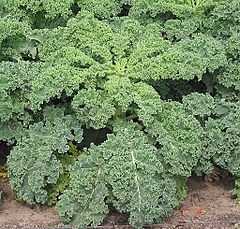
Kale or borecole is a form of cabbage (Brassica oleracea Acephala Group), green or purple, in which the central leaves do not form a head. It is considered to be closer to wild cabbage than most domesticated forms. The species Brassica oleracea contains a wide array of vegetables including broccoli, cauliflower, collard greens, and brussels sprouts. The cultivar group Acephala also includes spring greens and collard greens, which are extremely similar genetically. The name borecole most likely originates from the Dutch boerenkool (farmers cabbage).
Nutritional Value
Kale is considered to be a highly nutritious vegetable with powerful antioxidant properties; kale is considered to be anti-inflammatory. Kale is very high in beta carotene, vitamin K, vitamin C, lutein, zeaxanthin, and reasonably rich in calcium.
Kale, as with broccoli and other brassicas, contains sulforaphane (particularly when chopped or minced), a chemical believed to have potent anti-cancer properties. Boiling reduces the level of the anti-cancer compounds; however, steaming, microwaving, or stir frying do not result in significant loss. Along with other brassica vegetables, kale is also a source of indole-3-carbinol, a chemical which boosts DNA repair in cells and appears to block the growth of cancer cells. Kale is also a good source of carotenoids.
Culinary uses
Kale freezes well and actually tastes sweeter and more flavourful after being exposed to a frost. Tender kale greens can provide an intense addition to salads, particularly when combined with other such strongly-flavoured ingredients as dry-roasted peanuts, tamari-roasted almonds, red pepper flakes, or an Asian-style dressing.
In the Netherlands it is very frequently used in the winter dish stamppot and seen as one of the country's traditional dishes, called Boerenkool. In Ireland kale is mixed with mashed potatoes to make the traditional dish colcannon. It is popular on Halloween when it is sometimes served with sausages. Small coins are sometimes hidden inside as prizes.
A traditional Portuguese soup, caldo verde, combines pureed potatoes, diced kale, olive oil, broth, and, generally, sliced cooked spicy sausage. Under the name of couve, kale is also popular in Brazil, in caldo verde, or as a vegetable dish, often cooked with carne seca (shredded dried beef). When chopped and stir-fried, couve accompanies Brazil's national dish, feijoada.
In East Africa, it is an essential ingredient in making a stew for ugali, which is almost always eaten with kale. Kale is also eaten throughout southeastern Africa, where it is typically boiled with coconut milk and ground peanuts and is served with rice or boiled cornmeal. In Montenegro collards, locally known as rashtan is a favorite vegetable. It is particularly popular in winter, cooked with smoked mutton (kastradina) and potatoes.
Curly kale is used in Denmark and Halland, Sweden, to make (gron-)langkal, an obligatory dish on the julbord in the region, and is commonly served together with the Christmas ham (Sweden, Halland). The kale is used to make a stew of minced boiled kale, stock, cream, pepper and salt that is simmered together slowly for a few hours. In Scotland, kale provided such a base for a traditional diet that the word in dialect Scots is synonymous with food. To be "off one's kail" is to feel too ill to eat.
Kale is a very good source of iron, calcium, vitamin C, vitamin K and Carotenoids (which provide vitamin A). In Japan, kale juice (known as aojiru) is a popular dietary supplement.
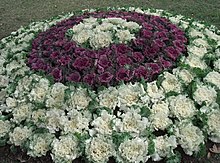
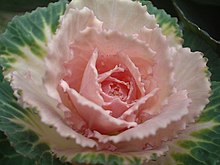
Many varieties of kale are referred to as "flowering kales" and are grown mainly for their ornamental leaves, which are brilliant white, red, pink, lavender, blue or violet in the interior or the rosette. Most plants sold as "ornamental cabbage" are in fact kales. Ornamental kale is as edible as any other variety, provided it has not been treated with pesticides or other harmful chemicals.
When uncooked, standard Kale is a popular garnish.

Reference : http://en.wikipedia.org/wiki/Kale

Superfood: Watercress

Watercresses (Nasturtium officinale, N. microphyllum; formerly Rorippa nasturtium-aquaticum, R. microphylla) are fast-growing, aquatic or semi-aquatic, perennial plants native from Europe to central Asia, and one of the oldest known leaf vegetables consumed by human beings. These plants are members of the Family Brassicaceae or cabbage family, botanically related to garden cress and mustard — all noteworthy for a peppery, tangy flavour.
The hollow stems of watercress are floating and the leaves are pinnately compound. Watercresses produce small white and green flowers in clusters.
Nasturtium nasturtium-aquaticum (nomenclaturally invalid) and Sisymbrium nasturtium-aquaticum L. are synonyms of N. officinale. Nasturtium officinale var microphyllum (Boenn. ex Reich.) Thellung is a synonym of N. microphyllum (ITIS, 2004). These species are also listed in some sources as belonging to the genus Rorippa, although molecular evidence shows that the aquatic species with hollow stems are more closely related to Cardamine than Rorippa. Watercresses are not closely related to the flowers in the genus Tropaeolum (Family Tropaeolaceae), popularly known as "nasturtiums".
Cultivation of watercress is practical on both a large scale and a garden scale. Being semi-aquatic, watercress is well-suited to hydroponic cultivation, thriving best in water that is slightly alkaline. It is frequently produced around the headwaters of chalk streams. In many local markets, the demand for hydroponically grown watercress exceeds supply. This is due in part to the fact that cress leaves are unsuitable for distribution in dried form and can only be stored for a short period.
However (in the UK at least), the packaging used by supermarkets using sealed plastic bags under some internal pressure (a plastic envelope containing moisture and pressurised (inflated) to prevent crushing of contents) has allowed the distribution of watercress. This has allowed national availability with a once purchased storage life of 1 – 2 days in chilled/refrigerated storage.
If unharvested, watercress can grow to a height of 50–120 cm. Also sold as sprouts, the edible shoots are harvested days after germination. Like many plants in this family, the foliage of watercress becomes bitter when the plants begin producing flowers.
New Market, Alabama, was once known (in the 1940s) as the "Watercress Capital of the World" in America. Watercress is often used in sandwiches, such as those made for afternoon tea.
Watercress is grown in a number of counties of the UK, most notably Hertfordshire, Hampshire, Wiltshire and Dorset, although the first commercial cultivation was along the River Ebbsfleet in Kent grown by William Bradbery (horticulturist) in 1808. Alresford, near Winchester, is often considered the watercress capital of Britain (to the extent that a steam railway line is named after the famous local crop). In recent years, watercress has become more widely available in the UK, at least in the South-East, being stocked pre-packed in some supermarkets, as well as fresh by the bunch at farmers' markets and greengrocers. Value-added produce such as the traditional watercress soup, as well as watercress pesto are increasingly easy to source.
Health benefits and cancer defense
Watercress contains significant amounts of iron, calcium and folic acid, in addition to vitamins A and C. In some regions watercress is regarded as a weed, in other regions as an aquatic vegetable or herb. Watercress crops grown in the presence of animal waste can be a haven for parasites such as the liver fluke Fasciola hepatica.
Many benefits from eating watercress are claimed, such as that it acts as a stimulant, a source of phytochemicals and antioxidants, a diuretic, an expectorant, and a digestive aid. It also appears to have antiangiogenic cancer-suppressing properties; it is widely believed to help defend against lung cancer. A 2010 study conducted by the University of Southampton found that consumption of watercress may also inhibit the growth of breast cancer. The PEITC content of watercress inhibits HIF which can inhibit angiogenesis.
Due to its high iodine content, watercress has a strengthening effect on the thyroid gland, thus beneficial for sufferers of hypothyroidism. In addition, watercress is a known inhibitor of the cytochrome P450 CYP2E1, which may result in altered drug metabolism for individuals on certain medications (e.g., chlorzoxazone).

Reference : http://en.wikipedia.org/wiki/Watercress

Superfood: Spinach

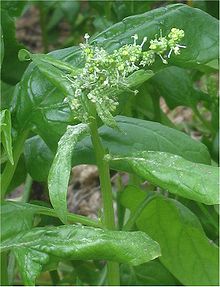
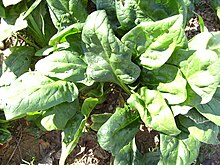
Spinach (Spinacia oleracea) is an edible flowering plant in the family of Amaranthaceae. It is native to central and southwestern Asia. It is an annual plant (rarely biennial), which grows to a height of up to 30 cm. Spinach may survive over winter in temperate regions. The leaves are alternate, simple, ovate to triangular-based, very variable in size from about 2–30 cm long and 1–15 cm broad, with larger leaves at the base of the plant and small leaves higher on the flowering stem. The flowers are inconspicuous, yellow-green, 3–4 mm diameter, maturing into a small, hard, dry, lumpy fruit cluster 5–10 mm across containing several seeds.
Nutrition
Spinach has a high nutritional value and is extremely rich in antioxidants, especially when fresh, steamed, or quickly boiled. It is a rich source of vitamin A (and especially high in lutein), vitamin C, vitamin E, vitamin K, magnesium, manganese, folate, betaine, iron, vitamin B2, calcium, potassium, vitamin B6, folic acid, copper, protein, phosphorus, zinc, niacin, selenium and omega-3 fatty acids. Recently, opioid peptides called rubiscolins have also been found in spinach.
Polyglutamyl folate (Vitamin B9 or folic acid) is a vital constituent of cells and spinach is a good source of folic acid. Boiling spinach can more than halve the level of folate left in the spinach, but microwaving does not affect folate content. Vitamin B9 was first isolated from spinach in 1941.

Iron

Spinach, along with other green leafy vegetables, is considered to be a rich source of iron. For example, the United States Department of Agriculture states that a 180 g serving of boiled spinach contains 6.43 mg of iron, whereas one 170 g ground hamburger patty contains at most 4.42 mg.
The bioavailability of iron is dependent on its absorption, which is influenced by a number of factors. Iron enters the body in two forms: heme iron and non-heme iron. All of the iron in grains and vegetables, and about three fifths of the iron in animal food sources (meats), is non-heme iron. The remaining portion from meats is heme iron. The iron in spinach is poorly absorbed by the body unless eaten with a source of vitamin C. The type of iron found in spinach is non-blood (non-heme), a plant iron, which the body does not absorb as efficiently as blood (heme) iron, found in meat.
The larger portion of dietary iron (nonheme) is absorbed slowly in its many food sources, including spinach. This absorption may vary widely depending on the presence of binders such as fiber or enhancers, such as vitamin C. Therefore, the body's absorption of non-heme iron can be improved by consuming foods that are rich in vitamin C. However, spinach contains iron absorption inhibiting substances, including high levels of oxalate which can bind to the iron to form ferrous oxalate, which renders much of the iron in spinach unusable by the body. In addition to preventing absorption and use, high levels of oxalates remove iron from the body. But some studies have found that the addition of oxalic acid to the diet may improve iron absorption in rats over a diet with spinach without additional oxalic acid. However, foods such as spinach that are high in oxalic acid can increase the risk of kidney stones in some people.

Calcium

Spinach also has a high calcium content. However, the oxalate content in spinach also binds with calcium, decreasing its absorption. Calcium and zinc also limit iron absorption. The calcium in spinach is the least bioavailable of calcium sources. By way of comparison, the body can absorb about half of the calcium present in broccoli, yet only around 5% of the calcium in spinach. Oxalate is one of a number of factors that can contribute to gout and kidney stones.
Types of spinach
A distinction can be made between older varieties of spinach and more modern varieties. Older varieties tend to bolt too early in warm conditions. Newer varieties tend to grow more rapidly but have less of an inclination to run up to seed. The older varieties have narrower leaves and tend to have a stronger and more bitter taste. Most newer varieties have broader leaves and round seeds.
There are three basic types of spinach:
  • Savoy has dark green, crinkly and curly leaves. It is the type sold in fresh bunches in most supermarkets. One heirloom variety of savoy is Bloomsdale, which is somewhat resistant to bolting.
  • Flat/smooth leaf spinach has broad smooth leaves that are easier to clean than savoy. This type is often grown for canned and frozen spinach, as well as soups, baby foods, and processed foods.
  • Semi-savoy is a hybrid variety with slightly crinkled leaves. It has the same texture as savoy, but it is not as difficult to clean. It is grown for both fresh market and processing. Five Star is a widely grown variety and has good resistance to running up to seed.
Spinach is sold loose, bunched, in prepackaged bags, canned, or frozen. Fresh spinach loses much of its nutritional value with storage of more than a few days. While refrigeration slows this effect to about eight days, spinach will lose most of its folate and carotenoid content, so for longer storage it is frozen, cooked and frozen, or canned. Storage in the freezer can be for up to eight months.

Reference : http://en.wikipedia.org/wiki/Spinach

Superfood: Eggplant

The eggplant, aubergine, melongene, brinjal, or guinea squash (Solanum melongena) is a plant of the family Solanaceae (also known as the nightshades) and genus Solanum. It bears a fruit of the same name, commonly used in cooking. As a nightshade, it is closely related to the tomato and potato and is native to Nepal, India, Bangladesh, Pakistan, and Sri Lanka.
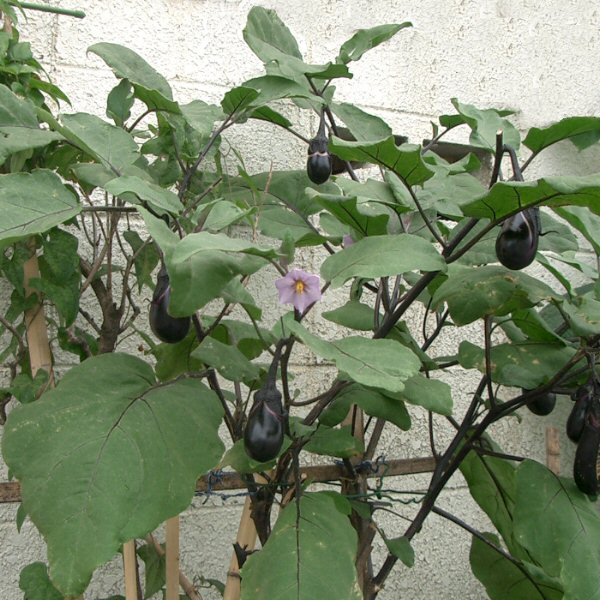
It is a delicate perennial often cultivated as an annual. It grows 40 to 150 cm (16 to 57 in) tall, with large coarsely lobed leaves that are 10 to 20 cm (4–8 in) long and 5 to 10 cm (2–4 in) broad. (Semi-)wild types can grow much larger, to 225 cm (7 ft) with large leaves over 30 cm (12 in) long and 15 cm (6 in) broad. The stem is often spiny. The flowers are white to purple, with a five-lobed corolla and yellow stamens. The fruit is fleshy, has a meaty texture, and is less than 3 centimetres (1.2 in) in diameter on wild plants, but much larger in cultivated forms.
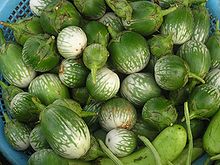
The fruit is botanically classified as a berry, and contains numerous small, soft seeds, which are edible, but are bitter because they contain nicotinoid alkaloids, unsurprising as it is a close relative of tobacco. Different varieties of the plant produce fruit of different size, shape and color, though typically purple. There are even orange varieties.
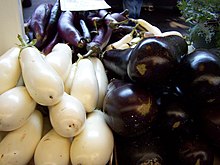
The most widely cultivated varieties (cultivars) in Europe and North America today are elongated ovoid, 12–25 cm wide (4½ to 9 in) and 6–9 cm broad (2 to 4 in) in a dark purple skin.
A much wider range of shapes, sizes and colors is grown in India and elsewhere in Asia. Larger varieties weighing up to a kilogram (2 pounds) grow in the region between the Ganges and Yamuna rivers, while smaller varieties are found elsewhere. Colors vary from white to yellow or green as well as reddish-purple and dark purple. Some cultivars have a color gradient, from white at the stem to bright pink to deep purple or even black. Green or purple cultivars in white striping also exist. Chinese varieties are commonly shaped like a narrower, slightly pendulous cucumber, and were sometimes called Japanese eggplants in North America.
Oval or elongated oval-shaped and black-skinned cultivars include Harris Special Hibush, Burpee Hybrid, Black Magic, Classic, Dusky, and Black Beauty. Slim cultivars in purple-black skin include Little Fingers, Ichiban, Pingtung Long, and Tycoon; in green skin Louisiana Long Green and Thai (Long) Green; in white skin Dourga. Traditional, white-skinned, egg-shaped cultivars include Casper and Easter Egg. Bicolored cultivars with color gradient include Rosa Bianca and Violetta di Firenze. Bicolored cultivars in striping include Listada de Gandia and Udumalapet. In some parts of India, miniature varieties (most commonly called Vengan) are popular. A particular variety of green brinjal known as Matti Gulla is grown in Matti village of Udupi district in Karnataka state in India.
The raw fruit can have a somewhat bitter taste, but becomes tender when cooked and develops a rich, complex flavor. Salting and then rinsing the sliced fruit (known as "degorging") can soften and remove much of the bitterness though this is often unnecessary. Some modern varieties do not need this treatment, as they are far less bitter.  The fruit is capable of absorbing large amounts of cooking fats and sauces, allowing for very rich dishes, but the salting process will reduce the amount of oil absorbed. The fruit flesh is smooth; as in the related tomato, the numerous seeds are soft and edible along with the rest of the fruit. The thin skin is also edible, so peeling is not required.
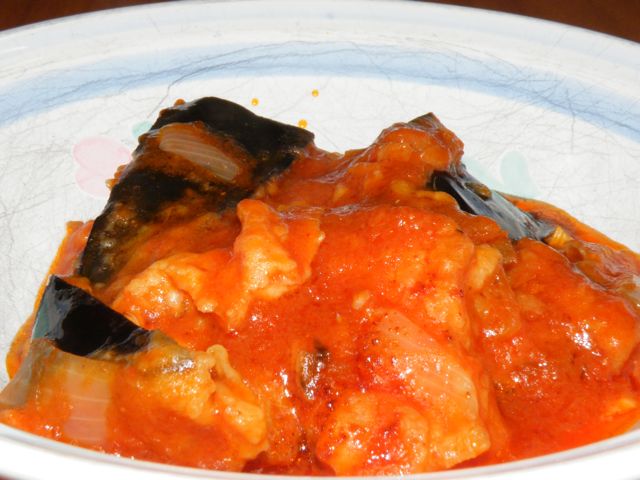
The plant is used in cuisines from Japan to Spain. It is often stewed, as in the French ratatouille, the Italian melanzane alla parmigiana, the Turkish musakka, and Middle-Eastern and South Asian dishes.
It may also be roasted in its skin until charred, so that the pulp can be removed and blended with other ingredients such as lemon, tahini, and garlic, as in the Middle Eastern dish baba ghanoush and the similar Greek dish melitzanosalata. Grilled, mashed and mixed with onions, tomatoes and spices make the Indian dish Baingan ka Bhartha or Gojju, similar to Salata de vinete in Romania, while a mix of roasted eggplant, roasted red peppers, chopped onions, tomatoes, mushrooms, carrots, celery and spices is called Zacusca in Romania or Ajvar in Serbia and Balkans.
The fruit can also be stuffed with meat, rice, or other fillings and then baked. In the Caucasus, for example, it is fried and stuffed with walnut paste to make nigvziani badrijani. It can also be found in Chinese cuisine, braised, stewed, steamed or stuffed.
As a native plant, it is widely used in Indian cuisine, for example in sambhar, dalma (a dal preparation with vegetables, native to Orissa), chutney, curries, and achaar. Owing to its versatile nature and wide use in both everyday and festive Indian food, it is often described (under the name brinjal) as the 'King of Vegetables'. In one dish, Brinjal is stuffed with ground coconut, peanuts, and masala and then cooked in oil.
In Pakistan it is called Bengun while in Bangladesh, it is called Begun. It, along with the fish Hilsa, is used to cook a famous Bengali wedding dish. Slices of eggplant are marinated with salt and chilli powder, covered with a batter of bashone and deep-fried and eaten as a snack. This is called Beguni or Bataun or Bhata or Baigana Bhaja (In Oriya).
Health Properties
Studies of the Institute of Biology of Sao Paulo State University, Brazil, have shown that eggplant is effective in the treatment of high blood cholesterol. Another study from Heart Institute of the University of Sao Paulo found no effects at all and does not recommend eggplant as a replacement to statins. It helps to block the formation of free radicals and is also a source of folic acid and potassium.
Eggplant is richer in nicotine than any other edible plant, with a concentration of 100 ng/g (or 0.01 mg/100g). However, the amount of nicotine from eggplant or any other food is negligible compared to passive smoking. On average, 20 lbs (9 kg) of eggplant contains about the same amount of nicotine as a cigarette.


Reference : http://en.wikipedia.org/wiki/Eggplant

Superfood: Chinese cabbage (Bok choy)

Chinese cabbage (Brassica rapa, subspecies pekinensis and chinensis) can refer to two distinct varieties of Chinese leaf vegetables used often in Chinese cuisine. These vegetables are both related to the Western cabbage, and are of the same species as the common turnip. Both have many variations in name, spelling and scientific classification–especially the "Bok choy" or chinensis variety.
Pekinensis
This group is the more common of the two, especially outside Asia; names such as napa cabbage, da baicai (lit. "large white vegetable"); Baguio pechay or pechay wombok (Tagalog); Chinese white cabbage; baechu (Korean), wongbok and hakusai (Japanese) usually refer to members of this group. Pekinensis cabbages have broad green leaves with white petioles, tightly wrapped in a cylindrical formation and usually forming a compact head. As the group name indicates, this is particularly popular in northern China around Beijing (Peking).
Chinensis
Chinensis varieties do not form heads; instead, they have smooth, dark green leaf blades forming a cluster reminiscent of mustard or celery. Chinensis varieties are popular in southern China and Southeast Asia. Being winter-hardy, they are increasingly grown in Northern Europe. This group was originally classified as its own species under the name B. chinensis by Linnaeus.
Other than the ambiguous term "Chinese cabbage," the most widely used name in Northern America for the chinensis variety is bok choy (from Cantonese, literally "white vegetable"; also spelled pak choi, bok choi, and pak choy). Less commonly, the Mandarin term xiao baicai ("small white vegetable") as well as the descriptive English names Chinese chard, Chinese mustard, celery mustard, and spoon cabbage are also employed.
Nutritional Value
Bok choy contains a high amount of Vitamin A per 4 oz. serving - about 3500 IU. Bok choy also contains approximately 50 mg of Vitamin C per 4 oz. serving.
Bok choy contains glucosinolates. These compounds have been reported to prevent cancer in small doses, but are toxic to humans in large doses. In 2009, an elderly woman who had been consuming 1 to 1.5 kg of raw bok choy per day developed hypothyroidism, resulting in myxedema coma.


Reference : http://en.wikipedia.org/wiki/Bok_choy